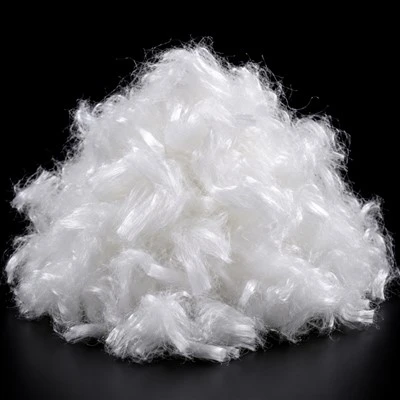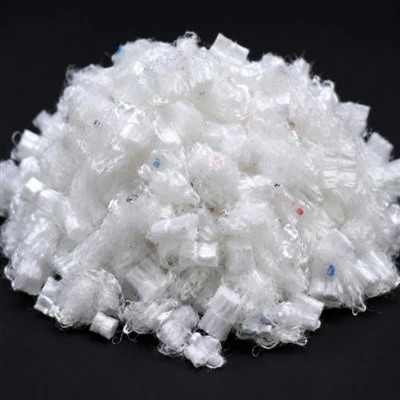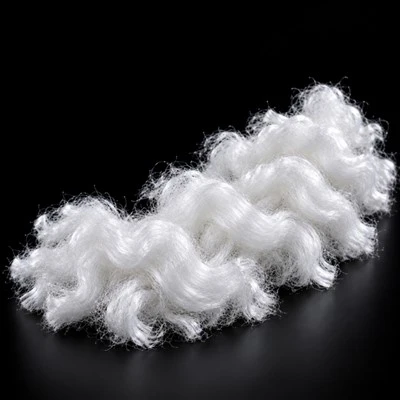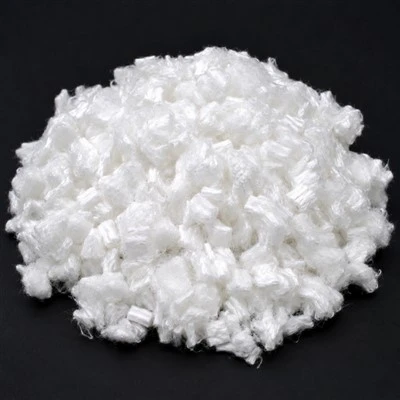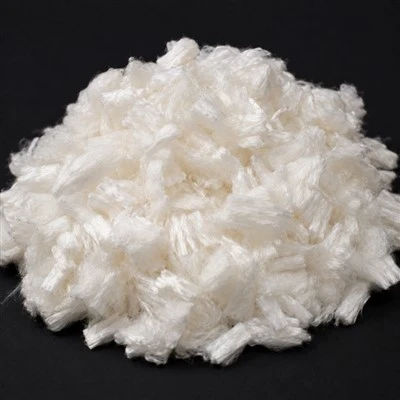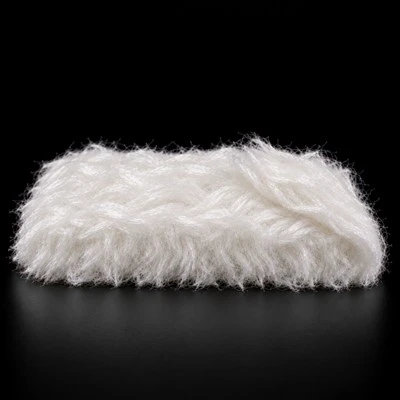
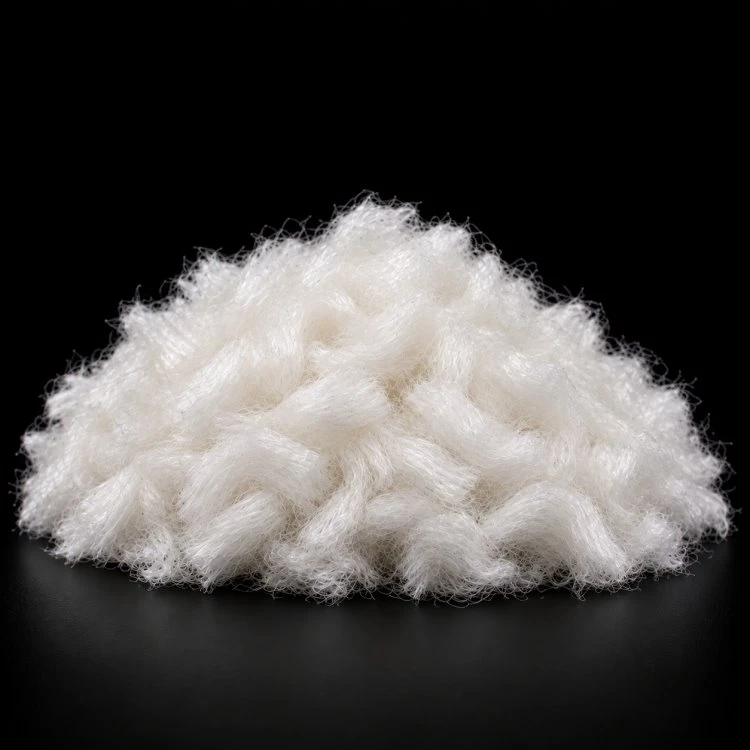
Suzhou Gongsheng Import & Export Co., Ltd. is one of the most reliable manufacturers and suppliers of nylon staple fiber in China, featured by quality products and low price. If you're going to wholesale advanced nylon staple fiber made in China, welcome to get pricelist and free sample from our factory. We also accept customized orders.
Opening
Nylon staple fiber is a polyamide fiber produced by melt spinning, commonly based on polycaprolactam (PA6) or the condensation polymer of hexamethylenediamine and adipic acid (PA66). Nylon is widely valued for abrasion resistance and elastic recovery, making it suitable for carpets, industrial textiles and durable blends. Actual abrasion and recovery performance should be evaluated against the relevant test method and grade.
Our polyamide staple fiber range is organised around three demand areas: carpet-grade nylon for tufted and commercial carpet, industrial-grade nylon for filtration, belting and geotextile reinforcement, and nylon fiber for spinning in blends with wool, viscose and cotton. Both nylon 6 and nylon 66 are available. PA66 is selected where higher melting point and rigidity are required, while PA6 offers a broader processing window and a softer hand.
Features & Material
High-tenacity nylon can be supplied at a dry tenacity of approximately 5.5–7.0 cN/dtex depending on grade. Its combination of strength, elongation and abrasion resistance supports repeated flexing and wear in dynamic service. Industrial-grade nylon is used in papermaker felts, conveyor belting, filter cloth and rope, while polyamide staple fiber can also be blended into wool suiting and workwear to improve wear performance. Nylon can be dyed with acid and metal-complex dye classes under suitable conditions.
Carpet-grade nylon can be supplied with engineered crimp and cross-section geometries, including trilobal and hollow forms, to support pile-height recovery and reduce matting in commercial installations. Nylon 66 has a melting point near 255°C versus roughly 220°C for nylon 6, which is relevant to high-temperature drying and heat setting; PA66 can also retain rigidity better under elevated-temperature conditions. Nylon for spinning can be supplied with antistatic finishes and controlled crimp for efficient carding, while dope-dyed grades are available for applications requiring enhanced colour fastness. Moisture regain is typically around 4–4.5%, depending on grade and test method.
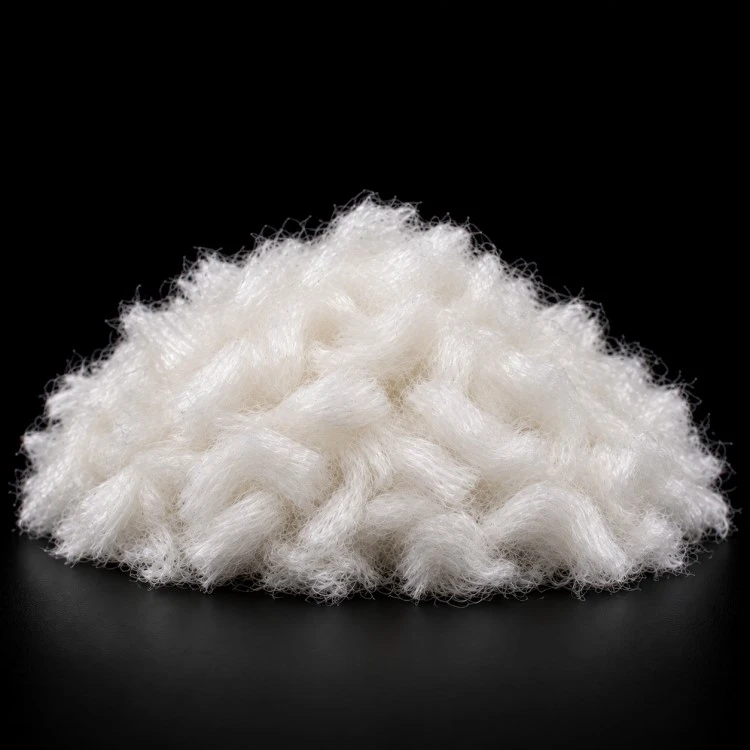
Specifications
|
Parameter |
Specification |
|
Material |
Polyamide 6 (PA6) / Polyamide 66 (PA66) |
|
Linear Density |
1.5D / 3D / 6D / 10D / 15D / 20D |
|
Cut Length |
38mm / 51mm / 64mm / 76mm / 102mm |
|
Luster |
Bright / Semi-dull |
|
Color |
Raw white / Dope dyed |
|
Cross-section |
Round / Trilobal / Hollow |
|
Dry Tenacity |
4.5–7.0 cN/dtex (high tenacity grade up to 7.0) |
|
Elongation |
20–40% |
|
Melting Point |
≈ 220°C (PA6) / ≈ 255°C (PA66) |
|
Moisture Regain |
4–4.5% |
|
Dyeing |
Acid / metal-complex dyes |
|
Application |
Carpet / Industrial felt / Filtration / Rope / Spinning blend |
Process Flow
Caprolactam or PA66 Salt → Polymerisation → Chip Drying → Melt Spinning → Quenching → Drawing → Crimping → Heat Setting → Cutting → Baling
Services
✓ Abrasion and flex-fatigue testing data to support industrial specification submissions.
✓ Carpet pile recovery and matting evaluation for commercial installation projects.
✓ Blend formulation support for wool, viscose and cotton industrial fabrics.
✓ Heat setting parameter guidance for shrink control and dimensional stability.
✓ Dope-dyed colour matching for applications requiring enhanced colour fastness.

FAQ
Q1. Should I choose PA6 or PA66 for my application?
A: Choose PA66 when the application requires a higher melting point (about 255°C versus 220°C), greater rigidity or better dimensional performance at elevated temperature. PA6 is often selected when a broader processing window, softer hand or cost efficiency is more important. The final choice should be based on the required processing conditions and test results.
Q2. Why is nylon specified for carpets rather than polyester?
A: Elastic recovery is an important reason. Nylon can recover its shape well after compression, which helps resist matting and maintain pile height in high-traffic commercial installations. Polyester can offer advantages in stain resistance and cost, so the preferred fiber depends on the carpet design and performance requirements.
Q3. Does nylon staple fiber work in blends with wool?
A: Yes. Adding polyamide staple fiber to wool can improve abrasion resistance and tensile performance while retaining much of the wool character. A blend range such as 15–30% can be evaluated as a starting point, but the optimum ratio should be confirmed by yarn and fabric trials.
Q4. How should nylon staple be dried and heat set?
A: Dry at moderate temperature with staged ramping; excessive initial heat may cause uneven moisture removal. Heat setting can be carried out in saturated steam or dry heat, with a typical starting range of 130–170°C depending on the target for bulk, crimp or dimensional stability. Final parameters should be established through line trials.
Hot Tags: nylon staple fiber, China nylon staple fiber manufacturers, suppliers, factory