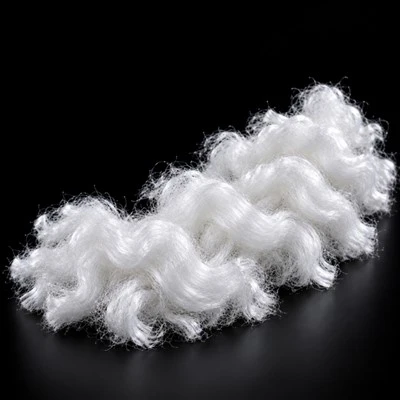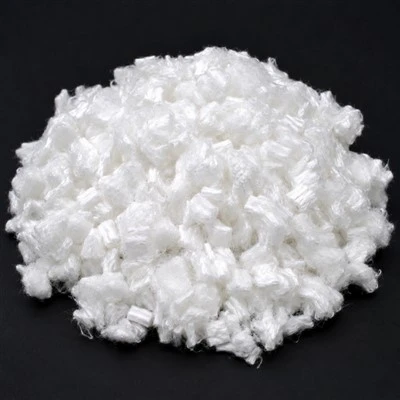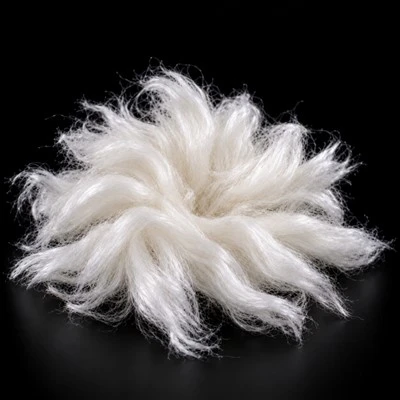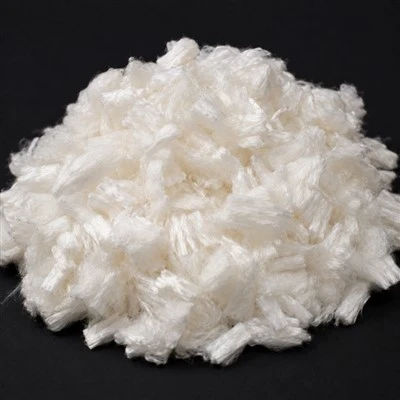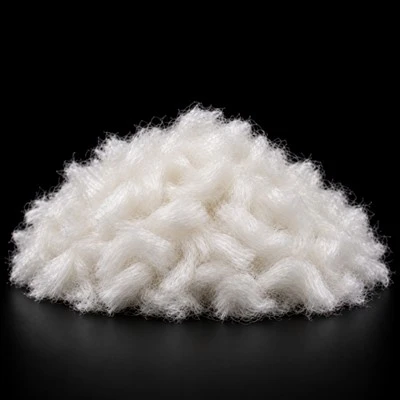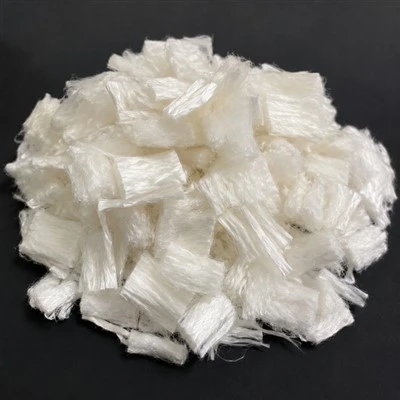
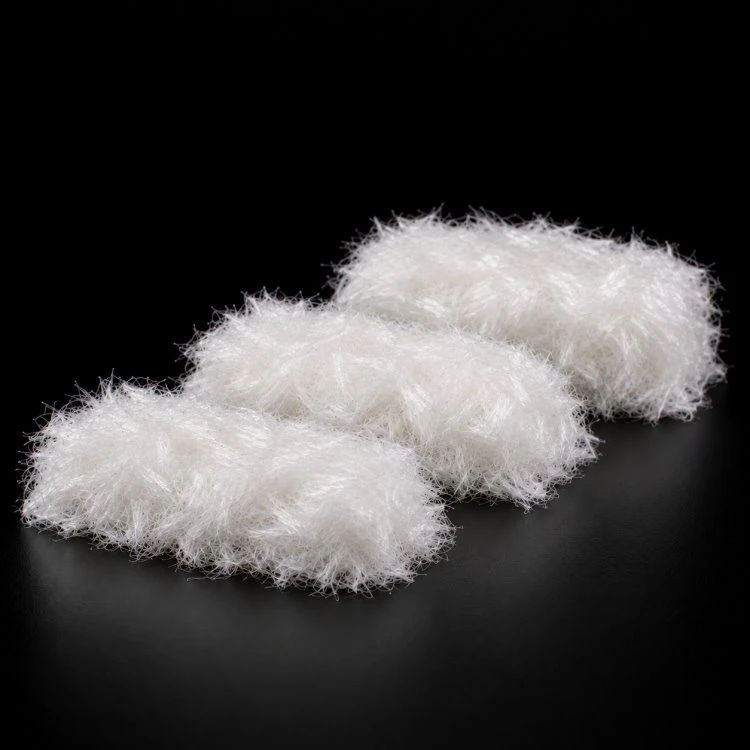
Suzhou Gongsheng Import & Export Co., Ltd. is one of the most reliable manufacturers and suppliers of polypropylene staple fiber in China, featured by quality products and low price. If you're going to wholesale advanced polypropylene staple fiber made in China, welcome to get pricelist and free sample from our factory. We also accept customized orders.
Opening
Polypropylene staple fiber is melt spun from isotactic polypropylene and has a low density of about 0.91 g/cm³, making it one of the lightest commercial textile fibers. Its low density and hydrophobicity support applications where low moisture uptake, chemical resistance and rot resistance are important, including geotextiles, concrete reinforcement and industrial filtration.
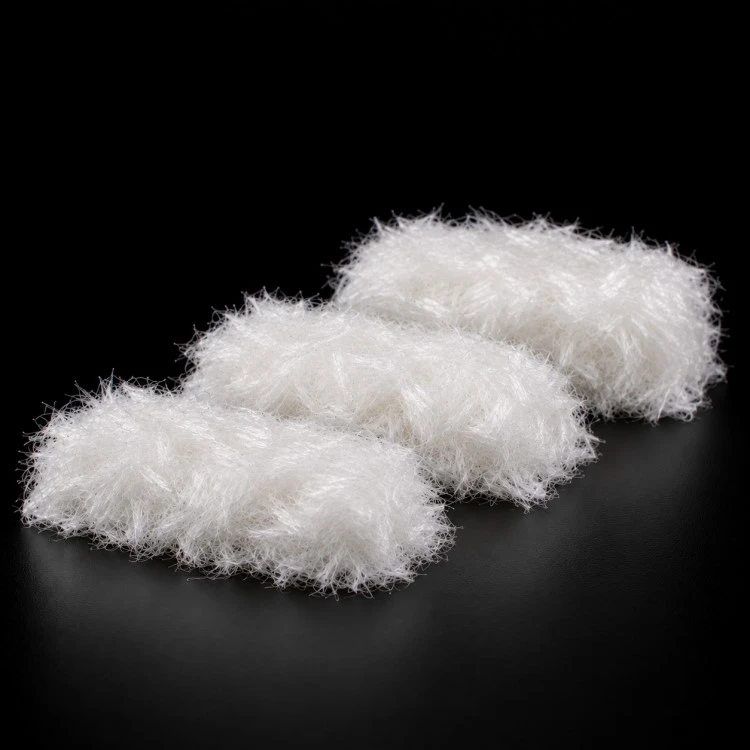
Our polypropylene fiber range includes pp staple fiber in cut lengths from 6 mm to 64 mm for different applications. PP fiber for concrete is supplied in concrete grades with 6, 12 or 19 mm cut lengths for plastic shrinkage crack-control applications. Geotextile grades support woven and nonwoven ground stabilisation and drainage structures. Nonwoven grades are available for spunbond and air-through lines used in hygiene, medical and filtration media. Fibrillated pp provides a network structure for mortar and concrete reinforcement, while high-tenacity pp fiber is available for rope and webbing.
Features & Material
Anti-crack pp fiber can be dosed in the range of 0.6–1.8 kg per cubic metre to form a dispersed three-dimensional network that helps control plastic shrinkage cracking as fresh concrete loses moisture. Crack-area reduction should be confirmed through the applicable project test method, mix design and control panel. Because polypropylene does not corrode, it avoids the rust-staining concern associated with steel fibers on exposed surfaces. Its low density also supports good dispersion when the mix design and mixing procedure are appropriate.
Fibrillated pp is produced by slitting and drawing a film into a continuous network, allowing the strands to mechanically anchor in the cement matrix. This structure can provide higher pull-out resistance than smooth monofilament at comparable dosage and is used in shotcrete, screeds and precast elements. Geotextile-grade pp can be stabilised against UV degradation for construction-stage exposure. Hydrophobic pp typically has very low water absorption; values below 0.1% should be confirmed for the specified grade and test method. Nonwoven pp is supplied with controlled crimp and length distribution for spunbond and air-through webs, while high-tenacity grades can be developed for rope, cordage and webbing.
Specifications
|
Parameter |
Specification |
|
Material |
100% Virgin Polypropylene (isotactic homopolymer) |
|
Form |
Monofilament / Fibrillated (network) |
|
Specific Gravity |
0.91 g/cm³ |
|
Linear Density |
1.5D / 3D / 6D / 10D / 15D |
|
Cut Length |
6mm / 12mm / 19mm (concrete) · 38mm / 51mm / 64mm (textile) |
|
Luster |
Bright |
|
Color |
Raw white / Dope dyed |
|
Dry Tenacity |
3.5–6.0 cN/dtex (high tenacity up to 6.0) |
|
Elongation |
20–40% |
|
Water Absorption |
< 0.1% |
|
Melting Point |
165–170°C |
|
Concrete Dosage |
0.6–1.8 kg/m³ |
|
Application |
Concrete / Mortar / Geotextile / Nonwoven / Rope / Filtration |
Process Flow
Propylene Monomer → Polymerisation (Ziegler-Natta) → Melt Spinning → Quenching → Drawing → Crimping or Fibrillation → Cutting → Baling
Services
✓ Concrete mix design support including dosage trials and crack-area measurement.
✓ Slump, air content and finishability evaluation for slab applications.
✓ UV-stability documentation for geotextile projects with defined exposure requirements.
✓ Dispersion testing to confirm fiber separation in dry-mix and wet-mix processes.
✓ Spunbond and air-through nonwoven line trial support with crimp and length tuning.

FAQ
Q1. How much pp fiber should I add to concrete?
A: For plastic shrinkage crack control, 0.6–1.8 kg/m³ can be used as a trial range, with 0.9 kg/m³ as one possible starting point for slabs on grade. Higher dosages may affect slump and finishability, so a trial pour and project-specific mix evaluation are recommended before finalising the specification.
Q2. Will polypropylene fiber corrode or stain exposed concrete?
A: No. Polypropylene is a non-metallic hydrocarbon polymer, so it does not corrode and does not produce rust staining. This can be advantageous for exposed architectural concrete where metallic reinforcement fibers may create staining concerns.
Q3. Can pp fiber take the heat of an industrial process?
A: The melting point is about 165–170°C. Although this is above many routine textile drying and finishing temperatures, the suitable processing temperature depends on the actual grade and process. High-temperature heat setting and direct contact with hot surfaces should be avoided unless the grade has been specifically designed and tested for that condition.
Q4. How does polypropylene compare with polyester for geotextile use?
A: Polypropylene is lighter and offers good chemical resistance, particularly in many acidic and alkaline environments, while polyester generally provides higher stiffness and modulus for reinforcement. For drainage and filtration, pp can be a suitable choice; for structural reinforcement, the preferred material depends on the required strength, modulus, durability and project specification.
Hot Tags: polypropylene staple fiber, China polypropylene staple fiber manufacturers, suppliers, factory