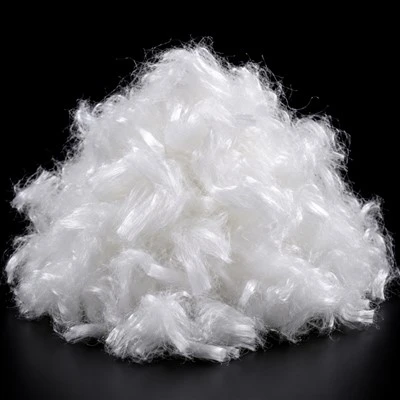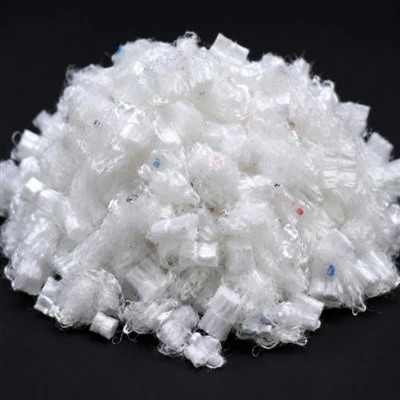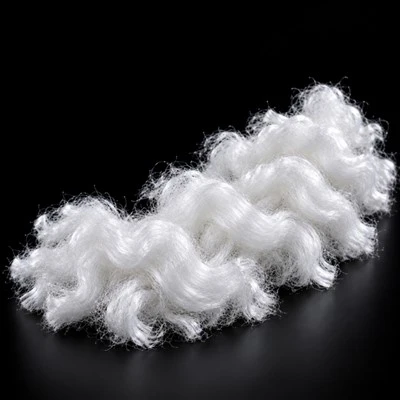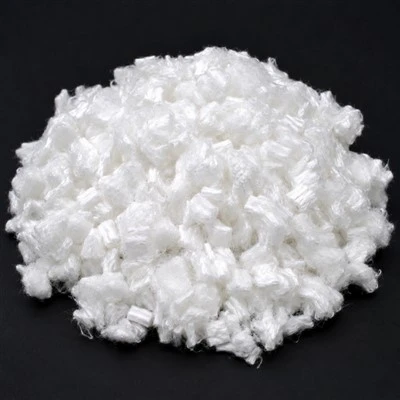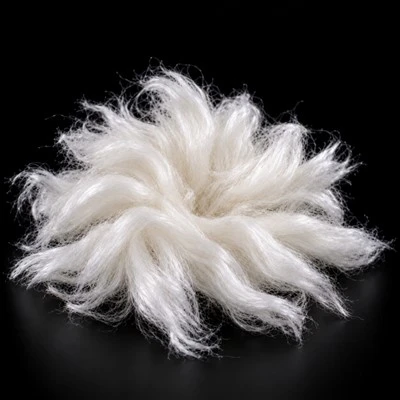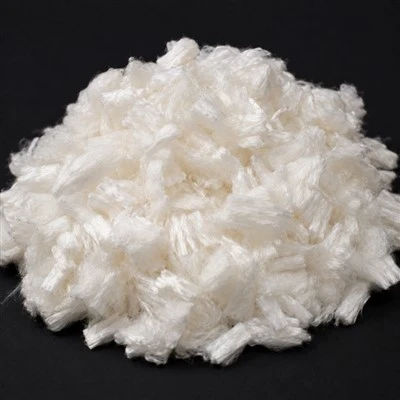
Polyester staple fiber has a specific gravity of 1.38, a melting point of 255-260℃, a glass transition temperature of approximately 70℃, and a breaking strength of 3.5-5.5 g/denier. It possesses wrinkle resistance, dimensional stability, and resistance to weak acids and alkalis, exhibiting stable performance in acidic environments with a pH of 3-8.
Compared to natural fibers, polyester staple fiber has disadvantages such as low moisture content, poor air permeability, poor dyeability, susceptibility to pilling and fuzzing, and easy staining. Its moisture absorption rate is only 0.4%, but dyeability and air permeability can be improved through modification treatments. Common modification methods include chemical modification and physical deformation, which can improve properties such as moisture absorption and antistatic properties. The fiber's elastic modulus reaches 22-141 cN/dtex, and its heat setting temperature can reach 180℃, making it suitable for high-temperature processing environments.