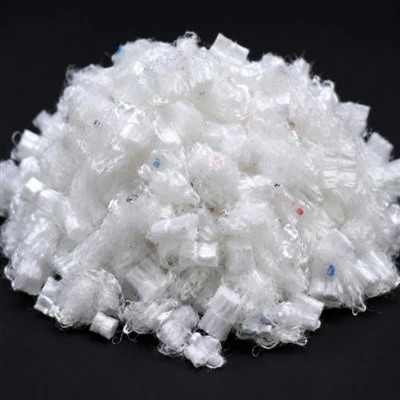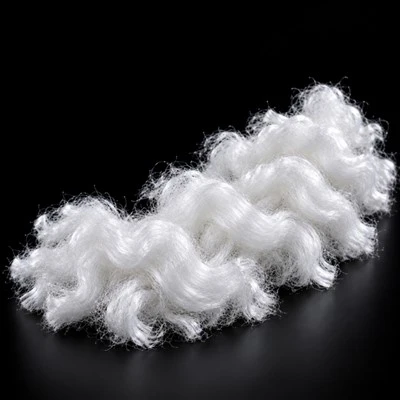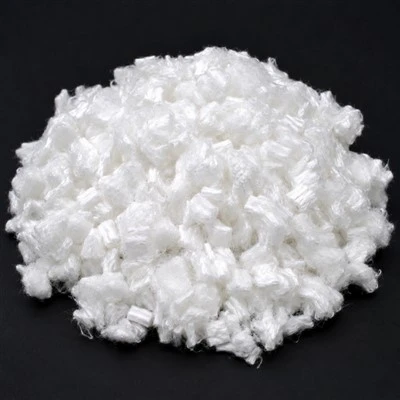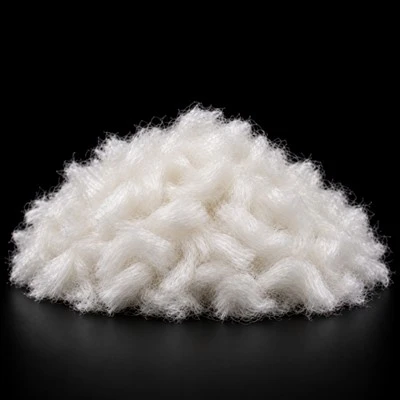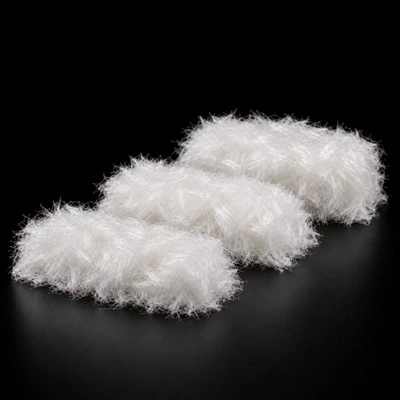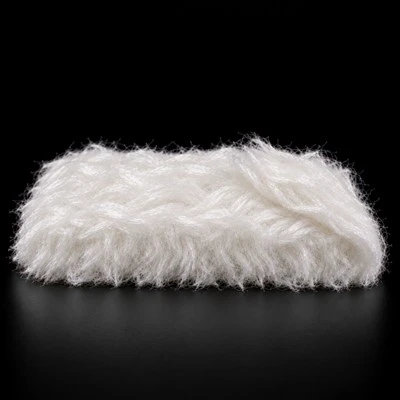
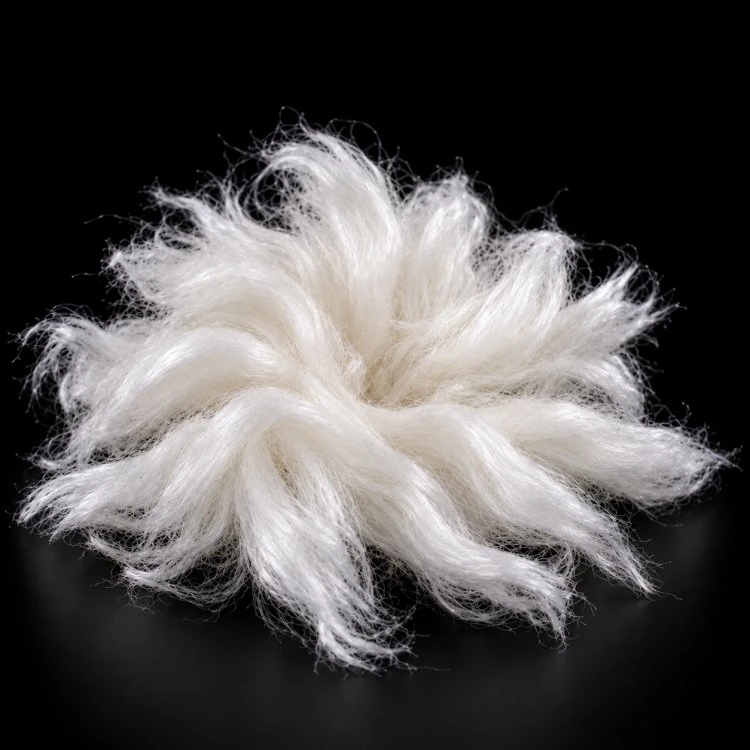
Suzhou Gongsheng Import & Export Co., Ltd. is one of the most reliable manufacturers and suppliers of lyocell staple fiber in China, featured by quality products and low price. If you're going to wholesale advanced lyocell staple fiber made in China, welcome to get pricelist and free sample from our factory. We also accept customized orders.
Opening
Lyocell is a solvent-spun cellulose fiber produced by dissolving wood pulp directly in N-methylmorpholine N-oxide (NMMO), rather than converting it into a xanthate derivative. Because the polymer is physically dissolved rather than chemically derivatized, the cellulose chain can remain relatively intact, and NMMO is recovered and recycled within the production process. This closed-loop approach is a key feature of commercial lyocell production.
Our lyocell fiber is positioned for spinners and fabric mills that need cellulose comfort combined with strength, whiteness, and lot-to-lot consistency for high-speed processing. Grades cover standard apparel type, cross-linked lyocell designed to suppress fibrillation, and high-tenacity lyocell for industrial and blend reinforcement - all available for spinning on ring, compact, and vortex systems.
Features & Material
Solvent-spun lyocell reaches a dry tenacity of 3.8–4.2 cN/dtex with roughly 85% of that strength retained when wet. This high wet-to-dry strength retention helps lyocell handle tension during wet finishing. The round cross-section provides a smooth surface that can support carding and drafting performance, while the high crystallinity contributes to a crisp hand and subtle luster in finished fabrics.
FSC-certified lyocell can be produced from pulp traced to responsibly managed forests, while sustainable lyocell may offer lower water and solvent impacts depending on the production system. Cross-linked lyocell uses a controlled cross-linking step to suppress fibrillation during abrasion and laundering. High-tenacity lyocell can serve industrial filtration, conveyor, and composite reinforcement applications, while 1.4 denier lyocell is commonly used for fine-count knitwear and shirting where a soft, breathable hand is desired. TENCEL™ lyocell and Lenzing lyocell are established reference products in this category; any equivalence of processing or performance should be confirmed against the specific grade and test method.
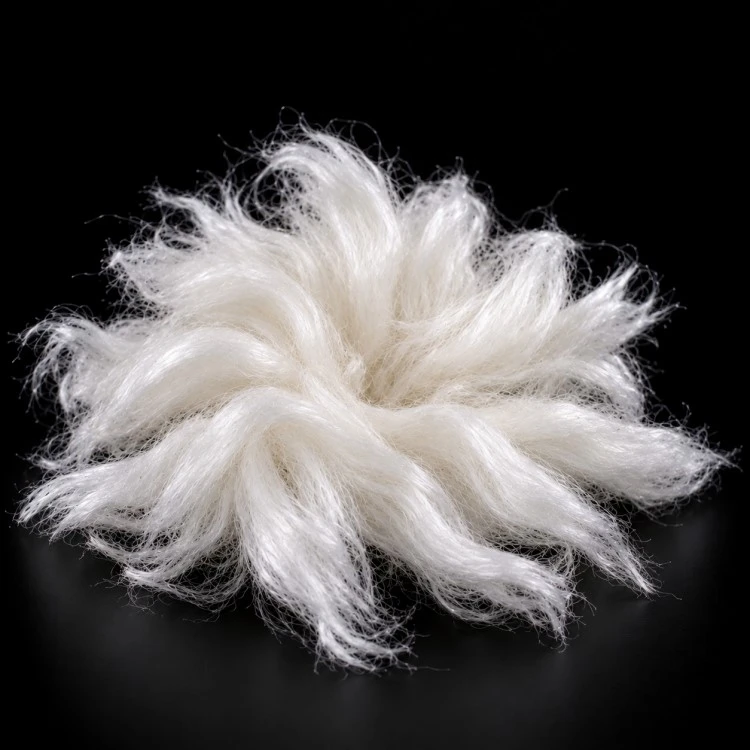
Specifications
|
Parameter |
Specification |
|
Material |
100% Lyocell (cellulose dissolved in NMMO, solvent recovery > 99%) |
|
Type |
Standard / Cross linked (anti-fibrillation) / High tenacity |
|
Linear Density |
1.0D / 1.2D / 1.4D / 2.2D |
|
Cut Length |
38mm / 40mm / 51mm / 60mm |
|
Luster |
Bright / Matte |
|
Cross-section |
Round |
|
Dry Tenacity |
3.8–4.2 cN/dtex |
|
Wet Tenacity |
≥ 3.2 cN/dtex (approx. 85% wet retention) |
|
Elongation |
12–16% |
|
Moisture Regain |
11–12% |
|
Fibrillation |
Standard grade / Suppressed (cross linked grade) |
|
Certification |
FSC / PEFC chain of custody available |
|
Application |
Apparel / Home textile / Nonwoven / Industrial |
Process Flow
FSC Wood Pulp → NMMO Dissolution → Filtration & Degassing → Dry-Jet Wet Spinning → Drawing → Washing → Solvent Recovery (>99%) → Cutting → Drying & Baling
Services
✓ FSC chain-of-custody and solvent recovery documentation can be provided for brand audits, where applicable.
✓ Fibrillation control guidance - mechanical, enzymatic, and cross-linked routes.
✓ Trial support for ring, compact and vortex spinning of fine-count yarns.
✓ Dyeing guidance for reactive dyes, including biopolishing and enzyme stone-wash processes.
✓ Evaluation bales from 10 kg with technical data sheet and spinning trial notes.

FAQ
Q1. What technically distinguishes lyocell from viscose?
A: Lyocell dissolves cellulose physically in NMMO and recovers the solvent, while viscose uses a chemical xanthation route. Lyocell generally offers higher dry and wet strength and has a round cross-section, while conventional viscose has a serrated cross-section and a softer hand. Exact performance depends on the grade and test method.
Q2. What does a closed loop process mean here?
A: It means the spinning solvent is captured, purified and returned to the process rather than discharged. Our specification indicates NMMO recovery above 99%; the applicable recovery rate should be confirmed against the production line and documentation for the supplied grade.
Q3. How can I control fibrillation in lyocell fabric?
A: Three practical routes are available: use a cross-linked lyocell grade designed to suppress fibrillation at the fiber level; apply a controlled enzyme treatment such as cellulase; or use mechanical finishing such as tumbling or stone washing to create a controlled peach-skin surface. The appropriate route depends on the finishing line and desired fabric effect.
Q4. Can I substitute lyocell for cotton in a ring spinning line?
A: Yes, with process adjustments. Lyocell is generally stronger and smoother than cotton, so it may draft differently. Draft settings, traveller weight, and other spinning parameters should be optimized through trials. Lyocell/cotton blends in the 30%–65% range can be considered depending on the yarn specification and desired performance.
Hot Tags: lyocell staple fiber, China lyocell staple fiber manufacturers, suppliers, factory