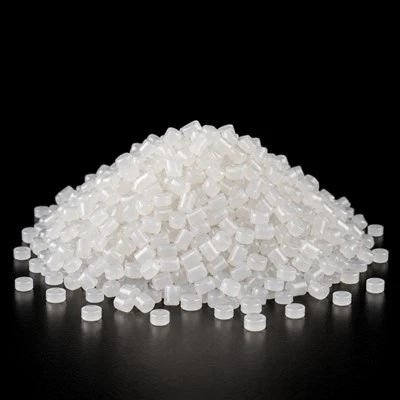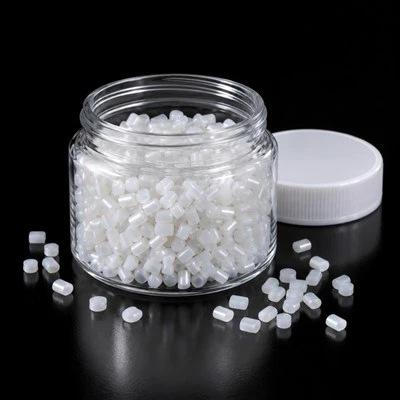
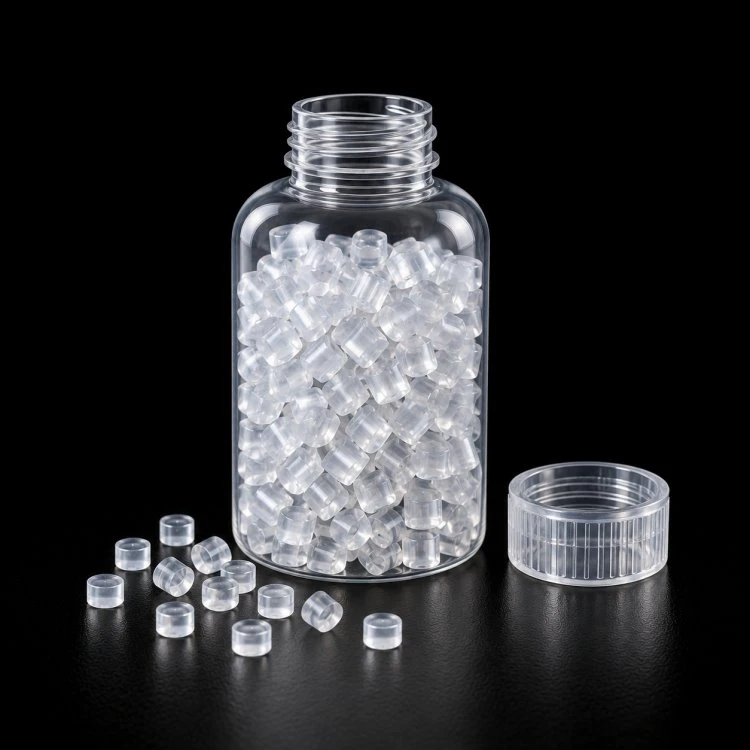
Suzhou Gongsheng Import & Export Co., Ltd. is one of the most reliable manufacturers and suppliers of bottle grade polyester chip in China, featured by quality products and low price. If you're going to wholesale advanced bottle grade polyester chip made in China, welcome to get pricelist and free sample from our factory. We also accept customized orders.
Opening
Bottle grade polyester chip is PET resin formulated for packaging applications, with IV, acetaldehyde control and other properties selected according to bottle type and processing requirements. The grade is designed to support stretch blow molding and the mechanical, optical and processing requirements of applications such as water bottles, CSD bottles, oil bottles, jars and other PET food containers.
The line is organized by application and process. bottle grade pet resin for water and CSD runs different IV and acetaldehyde specs - water bottles optimize taste safety (low AA), carbonated soft drink bottles optimize pressure strength. hot fill pet carries a crystallization and Tg package that survives filling at 85–95°C without catastrophic shrink, the standard for juices, teas and sauces. pet resin for bottles for edible oil and jars optimizes clarity and slow crystallization for wide-mouth precision. Applicable food-contact grades can be supplied with the relevant compliance documentation.
Features & Material
Key bottle-resin specifications include intrinsic viscosity, acetaldehyde content and crystallinity behavior. Typical IV ranges such as 0.80 dL/g for water-bottle grades and 0.82–0.85 dL/g for some CSD or hot-fill grades are grade dependent. AA limits and thermal/crystallinity performance should be confirmed from the specific lot specification and applicable food-contact requirements. Hot fill grades are designed to provide controlled dimensional stability under the specified filling conditions.
Processing guidance is part of the product. Preforminjection and reheat-blow parameters depend on drying quality - bottle grade pet should be dried to the moisture specification required by the resin supplier before melt processing, because excessive moisture can reduce IV and affect bottle clarity and mechanical performance. We deliver in moisture-barrier packaging with drying guidance, and our technical support covers preform design review for new bottle projects. Sustainability note: this line is also the source of the recycling stream - post-consumer bottles become rPET. For brands building closed-loop programs, we supply both virgin bottle grade and food-contact rPET bottle chip, letting preform plants blend or switch grades without changing machinery.
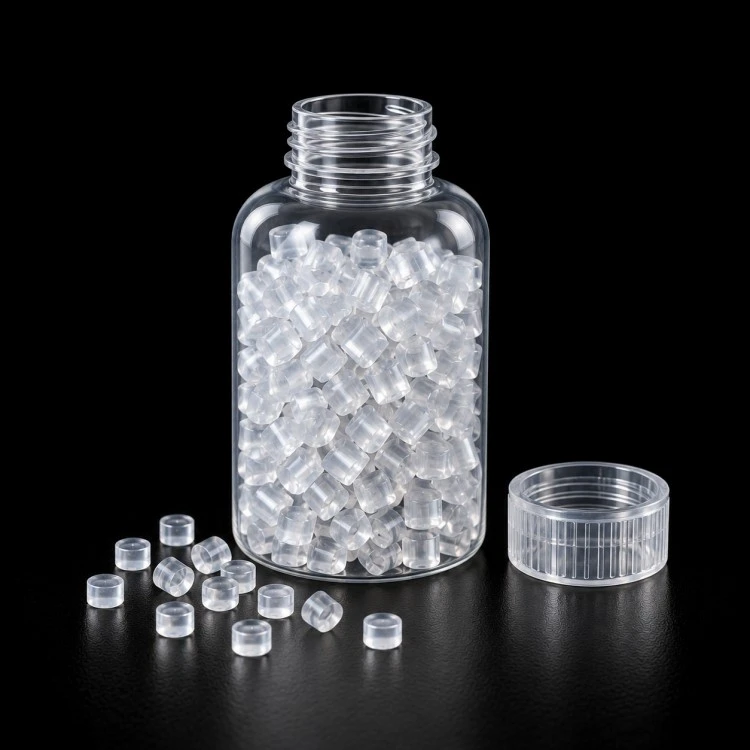
Specifications
|
Parameter |
Specification |
|
Material |
Polyethylene Terephthalate (PET), bottle grade |
|
Intrinsic Viscosity |
0.80 dL/g (water) · 0.82–0.85 dL/g (CSD / hot fill) |
|
Acetaldehyde |
≤1 ppm (water grade) · ≤3 ppm (standard) |
|
Melting Point |
248–252°C (copolymers) · 258–262°C (homopolymer) |
|
Crystallinity Behavior |
Nucleated for hot fill · slow-crystallizing for jars |
|
Color (b value) |
≤1.0 (water grade) |
|
Moisture (as delivered) |
≤0.005% in barrier packaging |
|
Comonomer |
IPA / CHDM modified grades available |
|
Food Contact |
EU 10/2011 · FDA compliance documentation per lot |
|
Packaging |
25 kg bags · 1100 kg big bags with liner |
|
Application |
Water & CSD bottles / Hot fill juice & tea / Oil bottles / Jars / Food containers |
Process Flow
PTA + MEG Feeding → Esterification → Pre-polycondensation → Final Solid-State Polycondensation (SSP) → Melt Filtration & Pelletizing → Crystallization & Drying → Quality Testing (IV / AA / Color) → Sieving & Blending → Food-Contact Packing → Lot Certification
Services
✓ IV and AA grade selection per bottle type and filling process.
✓ Preform design review and trial quantities for new bottle projects.
✓ Food-contact compliance documentation package per shipment.
✓ Hot fill process window consulting (nucleated grades).
✓ Virgin + food-contact rPET blending programs for closed-loop brands.

FAQ
Q1. What is the difference between bottle grade and fiber grade PET?
A: Molecular weight and contact compliance. Bottle grade runs 0.72–0.85 dL/g IV versus fiber grade's 0.64–0.68 - the higher IV gives blow-molded bottles their pressure and stacking strength. Bottle grades also carry acetaldehyde control and food-contact documentation that fiber grades do not need. They are the same polymer family, engineered for different failure modes.
Q2. Why does acetaldehyde (AA) content matter for water bottles?
A: AA migrates from PET into water and changes taste - no downstream filtration removes it once it is in the water. Water-grade resin controls AA to ≤1 ppm at chip level, which is what keeps bottled water tasting neutral through its shelf life.
Q3. What makes hot fill pet different from standard bottle resin?
A: Crystallization and thermal behavior. Hot fill bottles meet filling at 85–95°C; standard resin shrinks and deforms at those temperatures. The hot fill grade is nucleated and comonomer-balanced so the bottle neck and panel sections hold shape through the fill, with a controlled shrink budget on the certificate.
Q4. Can I blend recycled pet chip bottle grade with virgin?
A: Yes, and it is the standard route for rPET beverage bottles. Food-contact rPET chip runs on the same IV grid, and preform plants blend ratios from 25% to 100% depending on regulation and brand claim. We supply both components with matching specs so the blend behavior stays predictable.
Hot Tags: bottle grade polyester chip, China bottle grade polyester chip manufacturers, suppliers, factory