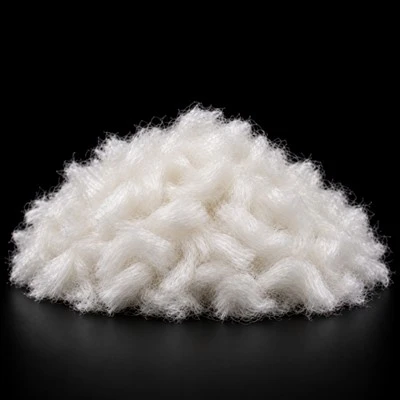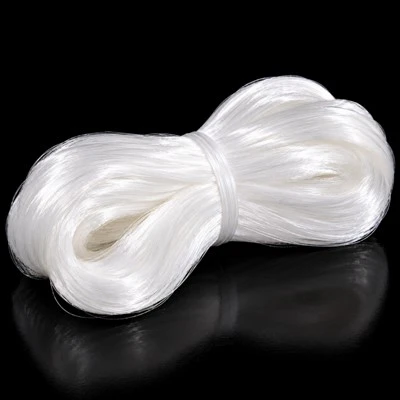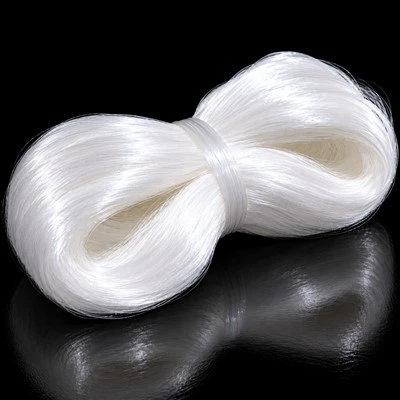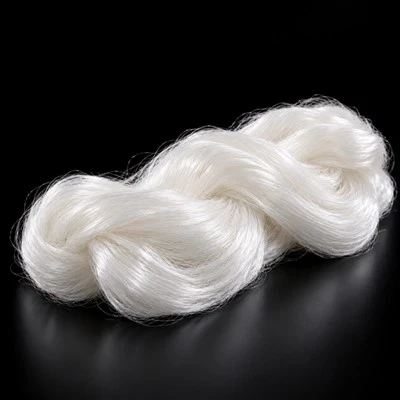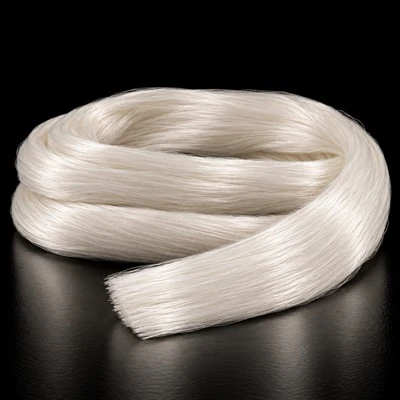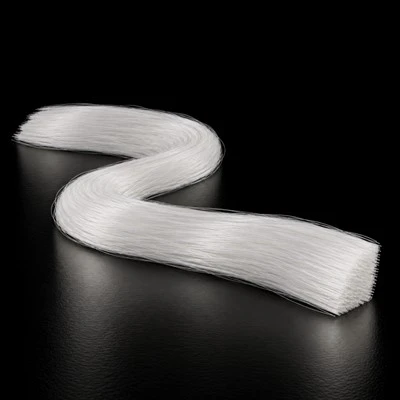
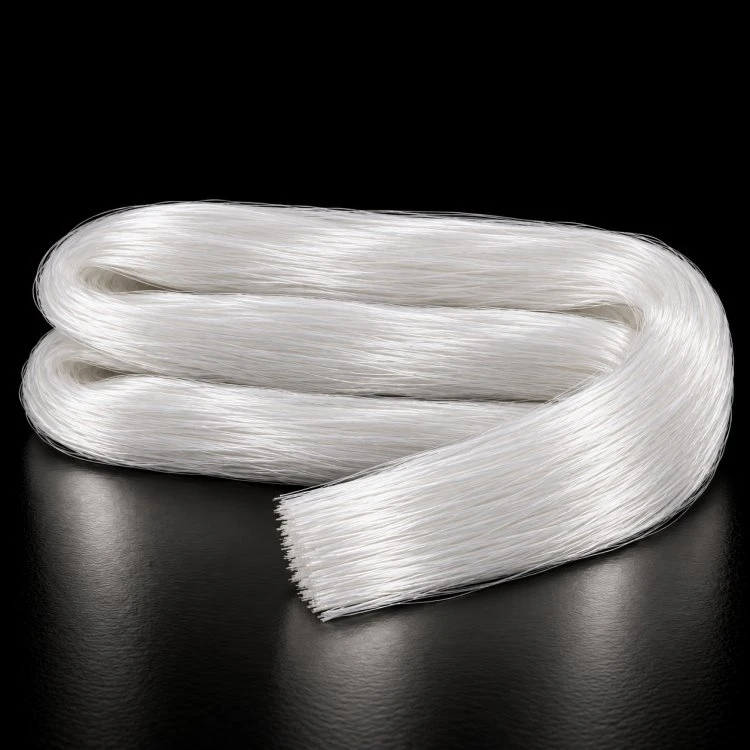
Suzhou Gongsheng Import & Export Co., Ltd. is one of the most reliable manufacturers and suppliers of nylon filament tow in China, featured by quality products and low price. If you're going to wholesale advanced nylon filament tow made in China, welcome to get pricelist and free sample from our factory. We also accept customized orders.
Opening
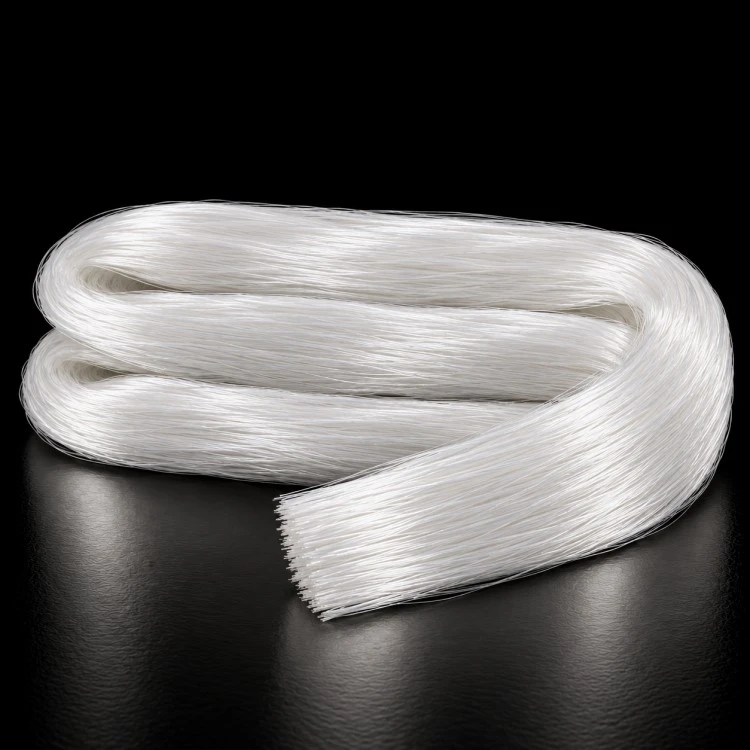
Nylon filament tow is polyamide 6 or polyamide 66 spun into a continuous, uncut bundle of parallel filaments - a raw format behind nylon staple and industrial yarn production. Melt-spun PA6 and PA66 are drawn to controlled orientation and combined into tow of high total denier, which converters can cut into staple for spinning or stretch and twist into industrial yarn. Polyamide's abrasion resistance, strength and elastic recovery support applications such as tires, ropes, airbags and seat belts, subject to grade and construction.
The polymer split matters in industrial applications. nylon 6 tow (melting ≈220°C) generally processes readily and is commonly used for staple spinning and general industrial yarn. nylon 66 tow (melting ≈260°C) generally offers higher thermal stability and can be selected for applications requiring higher modulus or fatigue performance. nylon for tire cord is a dedicated direction within both polymers, with shrinkage, fatigue and adhesion-related specifications defined by the downstream dipped-cord process.
Features & Material
The engineering case for polyamide tow rests on a combination of strength, recovery and fatigue performance. high tenacity nylon tow can be specified in the 7.0–8.5 cN/dtex range after drawing for applicable grades, while elastic recovery depends on polymer, construction and test method. nylon for tire cord remains an important direction where fatigue and adhesion-related performance are required; PA6 and PA66 are selected according to the downstream cord design. Shrinkage is a controlled variable for industrial grades and can be supplied on lot documentation where specified.
Staple conversion is a major route. nylon 6 tow can be cut into staple for socks, carpets, blankets and blends where abrasion resistance is valued; moisture regain is typically around 4–4.5%, with actual values dependent on grade and conditioning. For industrial buyers, PA6 and PA66 should be selected against service temperature and required fatigue performance. For staple buyers, acid-dye response and the availability of gel-dyed or dope-dyed variants can be practical selection factors. Production note: nylon tow absorbs moisture during storage, so conditioning to the agreed standard atmosphere before processing can help keep denier and shrinkage measurements comparable.
Specifications
|
Parameter |
Specification |
|
Material |
Polyamide 6 (PA6) / Polyamide 66 (PA66) |
|
Form |
Continuous filament tow, uncut bundle |
|
Bundle Total Denier |
0.4M / 0.8M / 1.2M / 1.5M denier per bundle |
|
Filament Denier |
1.5D / 2D / 3D / 6D |
|
Tenacity |
Standard 4.5–5.5 · HT 7.0–8.5 cN/dtex (after draw) |
|
Elongation |
16–40% (grade dependent) |
|
Elastic Recovery |
≥95% at 10% elongation |
|
Melting Point |
≈220°C (PA6) · ≈260°C (PA66) |
|
Boiling Shrinkage |
Certified per lot - industrial grade controlled spec |
|
Fatigue Performance |
PA66 superior under cyclic load & heat |
|
Moisture Regain |
4–4.5% |
|
Dye Class |
Acid dyes · gel / dope-dyed variants available |
|
Application |
Tire cord / Rope & netting / Airbag & seatbelt yarn / Staple spinning / Carpets & socks |
Process Flow
Caprolactam / Adipic Acid + HMD Feeding → Polymerization → Chip Drying → Melt Extrusion → Melt Spinning (Large Bundle) → Quench & Oiling → Multi-stage Drawing → Relaxation / Heat Setting → Tow Can Coiling → Conditioning, Grading & Packing
Services
✓ PA6 vs PA66 selection matrix by service temperature and fatigue requirement.
✓ Shrinkage & fatigue certificate support for tire cord and dipped-cord lines.
✓ Stretch-line parameter development for high tenacity nylon tow.
✓ Staple conversion trials with spinning room data (static, breakage).
✓ Conditioning and packaging options matched to your feeding system.

FAQ
Q1. Why is nylon still used for tire cord when polyester is cheaper?
A: Fatigue and adhesion-related performance are key considerations. Under the specified cyclic load and temperature, PA66 can be selected for dimensional stability and fatigue requirements, while PA6 and PA66 can be designed for the adhesion requirements of the dipped-cord system. The relative cost-benefit depends on the tire design and performance specification.
Q2. When should I choose nylon 66 tow over nylon 6 tow?
A: Make the decision against service temperature and required fatigue performance. PA66 is generally selected where higher thermal stability and fatigue performance are required, while PA6 is widely used for staple spinning and general industrial yarn. Actual selection should follow the customer's process and end-use specifications.
Q3. What does nylon for tire cord specification actually control?
A: Shrinkage, fatigue performance and adhesion-related surface properties. The downstream dipped-cord process sets stretching and oven conditions against the tow's specified shrinkage, and industrial lots can be supplied with the relevant data. Fatigue specifications are intended to address service requirements, not only processing breakage.
Q4. Does moisture really matter when processing polyamide tow?
A: Yes. Nylon is moisture-sensitive, and denier and shrinkage readings can vary with conditioning state. Conditioning tow to the agreed standard atmosphere before cutting or stretching helps keep processing stable and downstream quality data comparable from lot to lot.
Hot Tags: nylon filament tow, China nylon filament tow manufacturers, suppliers, factory