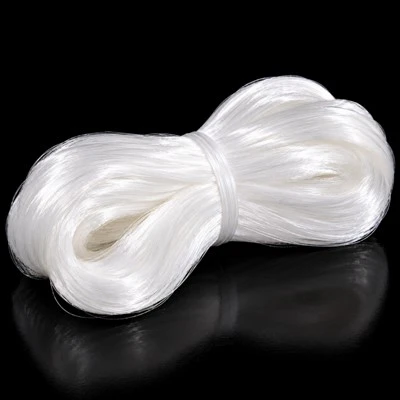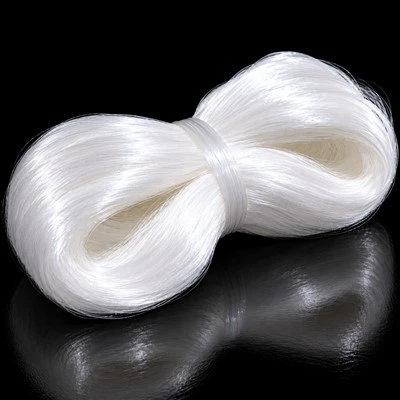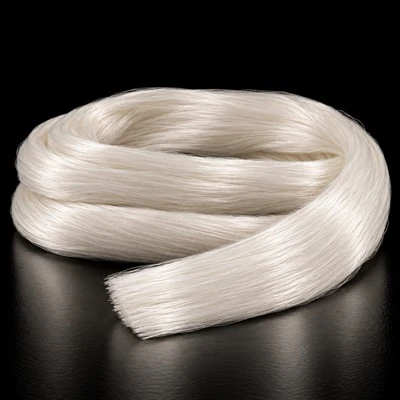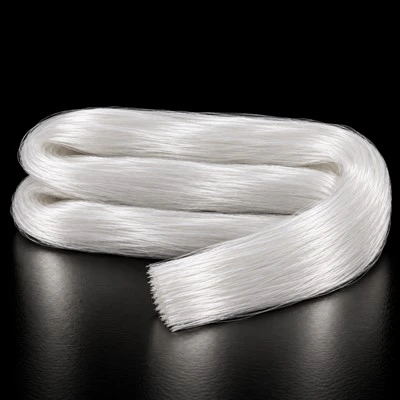
Suzhou Gongsheng Import & Export Co., Ltd. is one of the most reliable manufacturers and suppliers of lyocell filament tow in China, featured by quality products and low price. If you're going to wholesale advanced lyocell filament tow made in China, welcome to get pricelist and free sample from our factory. We also accept customized orders.
Opening
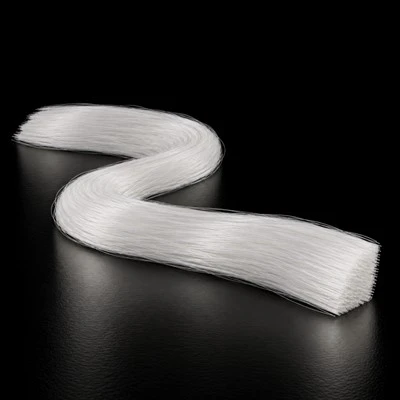
Lyocell filament tow is the NMMO-spun cellulosic delivered in continuous, uncut bundle form: wood pulp dissolved directly in amine oxide solvent, dry-jet wet spun into round, smooth filaments, and combined into tow that the customer cuts, crimps or consumes directly. The chemistry is the cleanest in the cellulose business - solvent recovery above 99%, no carbon disulfide, no derivatization - and the fiber itself is stronger than any other regenerated cellulose, dry or wet. lyocell tow carries that strength advantage into every downstream conversion.
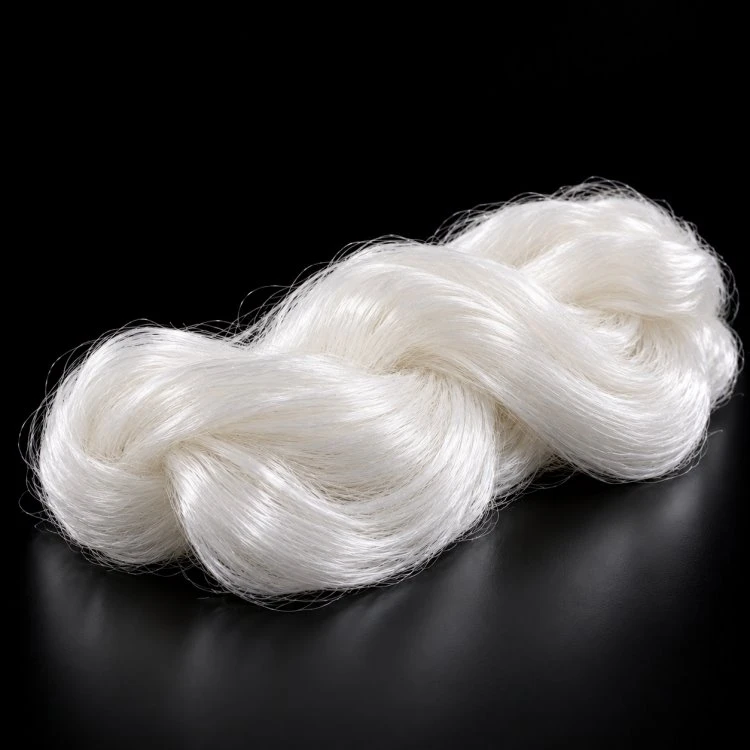
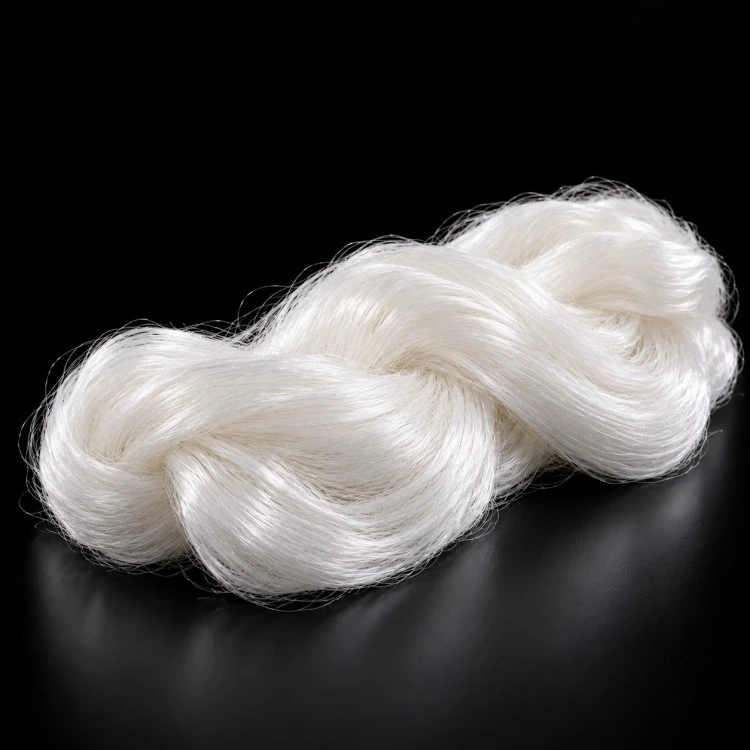
The product serves two main directions. lyocell tow for spinning feeds worsted and semi-worsted cutting lines where the cut fiber is spun into high-count yarns: the fiber's circular cross-section and high tenacity can support spinnability advantages over standard staple viscose in suitable systems. cellulose filament tow is also consumed directly by nonwoven and specialty lines - spunlace wipes, wet-laid glass-mat binders, degradable reinforcement - where uncut continuous filaments maximize web integrity. raw white lyocell tow is our standard supply form, dope-dyed and blend-ready variants on request.
Features & Material
The case for lyocell tow over viscose tow is physical, not narrative. Dry tenacity is specified at 3.8–4.8 cN/dtex for the listed grade, while wet tenacity is around 85% of dry under the stated test basis; actual values are grade and test-method dependent. and the smooth round cross-section means less fibrillation noise on cutting and opening lines. For tencel tow cut into staple and spun on cotton or worsted systems, that strength converts directly into higher spinning limits, fewer end breaks, and yarn regularity that mills can charge for. The fiber's high wet modulus also means the cut staple survives dyeing and finishing with far less strength loss.
Two processing notes deserve honesty. First, fibrillation: under sustained wet mechanical action, surface microfibrils peel from the filament body - an asset for peach-skin and Lyocell-T fabrics, but a control item on high-shear wet lines; enzyme finishing or crosslinked variants manage it. Second, tow handling: lyocell tow's stiffness profile differs from viscose tow, so cutting-line tension settings should be re-baselined rather than copied. In return, the process story can support sustainability positioning when backed by applicable documentation: closed-loop solvent, certified forestry pulp, and a biodegradable fiber body. Applications: high-count spinning, spunlace and wipes, degradable nonwovens, specialty papers, and reinforcement for biocomposites.
Specifications
|
Parameter |
Specification |
|
Material |
Regenerated Cellulose (Lyocell) |
|
Process |
NMMO solvent spinning, closed loop ≥99% |
|
Form |
Continuous filament tow, uncut bundle |
|
Bundle Total Denier |
0.4M / 0.8M / 1.2M denier per bundle |
|
Filament Denier |
1.0D / 1.4D / 1.7D / 3D |
|
Dry Tenacity |
3.8–4.8 cN/dtex |
|
Wet Tenacity |
≈85% of dry value |
|
Wet Modulus |
High (HWM-class or above) |
|
Elongation |
13–18% |
|
Moisture Regain |
11–12% |
|
Cross-section |
Round, smooth |
|
Supply Form |
raw white lyocell tow · dope-dyed · crosslinked (fibrillation-controlled) |
|
Certification |
FSC chain-of-custody · OEKO-TEX Standard 100 |
|
Application |
High-count spinning / Spunlace & wipes / Degradable nonwovens / Specialty paper / Biocomposites |
Process Flow
FSC-Certified Wood Pulp → NMMO Dissolution → Filtration → Dry-Jet Wet Spinning → Coagulation Bath → Multi-stage Drawing → Washing → Solvent Recovery (≥99%) → Drying & Tow Can Coiling → Grading & Packing
Services
✓ Cut-line tension re-baselining support for mills switching from viscose tow.
✓ Fibrillation management recipes - enzyme finishing and crosslinked grade options.
✓ Spinning trials for lyocell tow for spinning with count and breakage reports.
✓ FSC documentation package per shipment for downstream claims.
✓ Sample tow cans for nonwoven line trials and lab web formation.

FAQ
Q1. How does lyocell tow differ from viscose tow physically?
A: Strength across the board. Dry tenacity is 3.8–4.8 cN/dtex for the listed grade, while wet tenacity is around 85% of dry under the stated test basis; actual comparison depends on grade and test method. and the round smooth cross-section processes with less fuzz. The practical consequences are higher spinning limits on cut staple and fewer web breaks on wet-laid and spunlace lines.
Q2. What is fibrillation and should I worry about it?
A: Under sustained wet mechanical shear, surface microfibrils can peel from the filament - visible as a peach-fuzz surface. For peach-skin fabrics it is the desired effect; on clean-surface products it is controlled with enzyme finishing or by ordering the crosslinked grade. It is a manageable process variable, not a defect, and we support customers with finishing recipes.
Q3. Why specify raw white lyocell tow instead of pre-cut staple?
A: Control. Uncut tow lets your line set the cut length, crimp condition and finish state, and it often costs less per ton than mill-cut staple. Spinning mills running multiple staple lengths from one supply, and nonwoven lines feeding tow directly, both gain flexibility and yield.
Q4. Is the sustainability claim auditable downstream?
A: Yes. Each applicable certified lot can be accompanied by FSC chain-of-custody documentation, while the NMMO closed-loop process can support the product's sustainability positioning. Your brand can pass the certificate chain to retail; what it does not cover is chemical use at your own mill, which remains your compliance scope.
Hot Tags: lyocell filament tow, China lyocell filament tow manufacturers, suppliers, factory