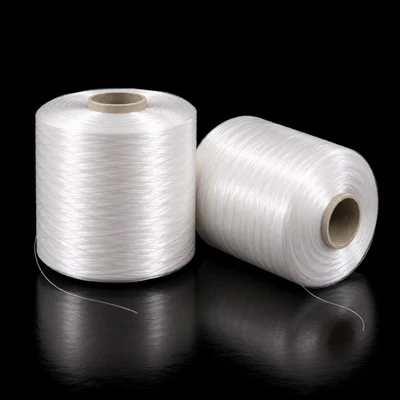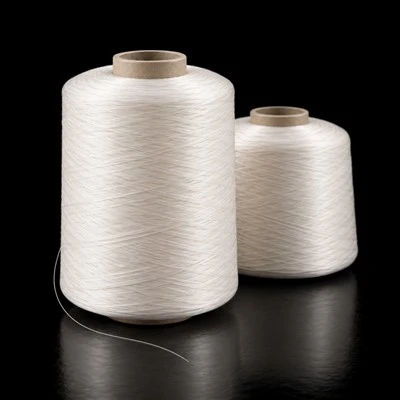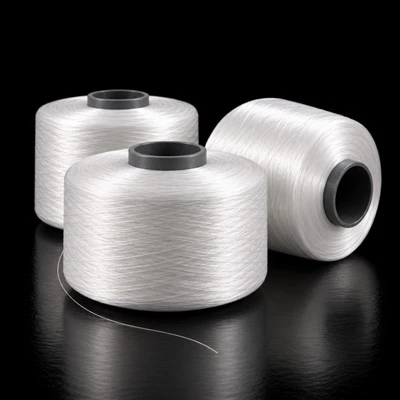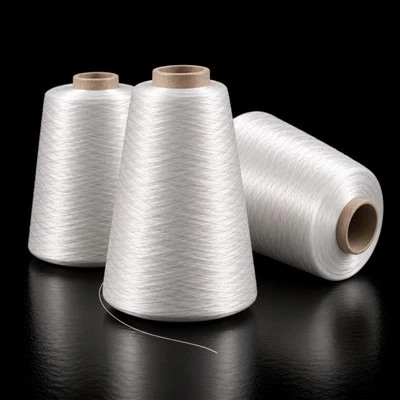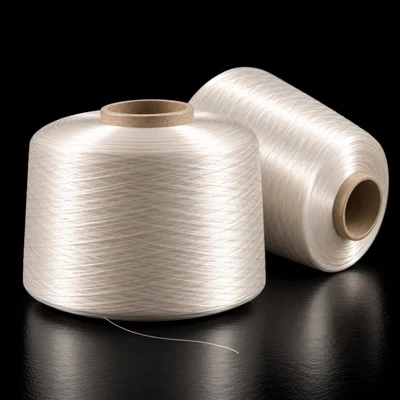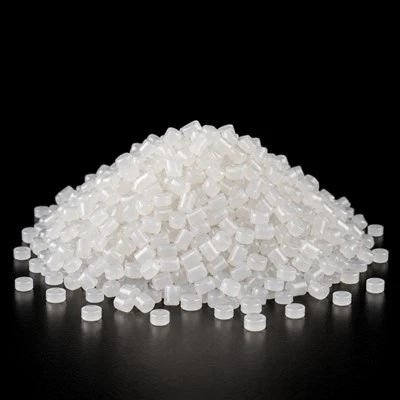
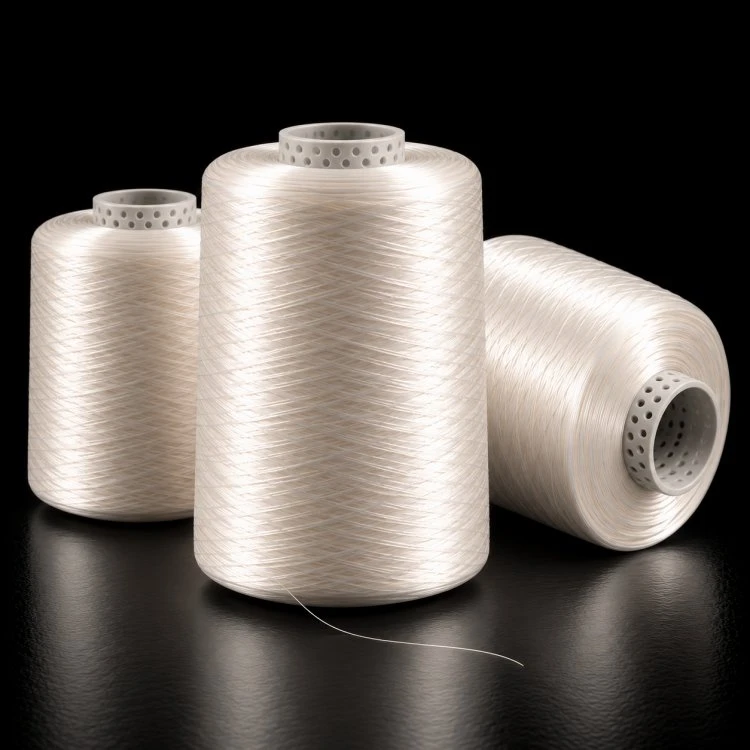
Suzhou Gongsheng Import & Export Co., Ltd. is one of the most reliable manufacturers and suppliers of viscose filament yarn in China, featured by quality products and low price. If you're going to wholesale advanced viscose filament yarn made in China, welcome to get pricelist and free sample from our factory. We also accept customized orders.
Opening
Viscose filament yarn is the original regenerated-cellulose continuous filament: wood pulp is converted to alkali cellulose, reacted with carbon disulfide into cellulose xanthate, dissolved into viscous dope and wet spun through a spin bath where cellulose regenerates into endless filaments. The result retains cellulose-like moisture behavior - typically around 13% regain - in a filament form that can provide silk-like drape and dye appearance in suitable constructions, often at a lower cost. This is the fiber behind classic linings, charmeuse-look dress fabrics and the deep, saturated prints that made rayon famous.
Our viscose program is built around two commercial poles. viscose lining grade yarn is engineered for the jacket and coat lining trade: high evenness, controlled shrinkage and a luster calibrated to sit under shell fabric without outshining it. Fashion-grade rayon continuous filament serves dress fabrics, scarves and ethnic textiles - sari, kimono and embroidered panels - where the liquid drape and deep reactive-dye yield are the selling point. bailu viscose yarn, our brightness-focused series, is positioned for lining applications where shade consistency and controlled defect levels are important.
Features & Material
The comfort story of viscose yarn is straightforward cellulose physics: moisture absorption broadly comparable with cotton, a cool hand feel, a lower tendency to static under suitable conditions, and a dye affinity with reactive and direct dyes that produces the deep, liquid color saturations synthetic filaments approximate only through heavy texturing. Where viscose filament differs from staple viscose is fabric character - continuous filament gives smooth surfaces, high luster potential and a fluid drape with no hairy edge, which is why printed charmeuse-look fabrics in rayon still outsell polyester imitations in the dress trade.
Practical production notes matter with this fiber. Wet tenacity falls to roughly half the dry value, so weaving and finishing must avoid high wet tension; singeing is generally unnecessary because the filament surface is naturally clean. viscose lining grade yarn is supplied with shrinkage data on both warp and weft so lining makers can set shrink-resist finishing correctly. For mills blending or interweaving with cotton, cotton viscose yarn constructions gain the comfort of cellulose with the evenness of filament - the combination that dominates the premium shirt lining segment. Careful pH control in dyeing (mild acid final rinse) preserves the fiber's luster, and storage should follow the applicable supplier and warehouse requirements for long dwell periods.

Specifications
|
Parameter |
Specification |
|
Material |
Regenerated Cellulose (Viscose) |
|
Process |
Wet spinning from cellulose xanthate dope |
|
Form |
Continuous filament, multifilament |
|
Linear Density |
75D / 120D / 150D / 250D / 300D |
|
Filament Count |
30F / 48F / 75F |
|
Dry Tenacity |
1.6–2.2 cN/dtex |
|
Wet Tenacity |
0.8–1.1 cN/dtex (≈50% of dry; grade/test-method dependent) |
|
Elongation |
18–26% (dry) |
|
Moisture Regain |
12.5–14% |
|
Luster |
Bright / Semi-dull / Dull |
|
Dye Class |
Reactive / Direct / Vat dyes |
|
Boiling Shrinkage |
Typically ≤2.5% for lining grade; grade/test-method dependent |
|
Application |
Lining / Dress fabric / Scarf / Sari & kimono / Embroidery |
Process Flow
Wood Pulp Feeding → Alkali Steeping & Pressing → Xanthation (CS2) → Dissolution & Ripening → Filtration & Deaeration → Wet Spinning → Regeneration Bath → Washing & Desulfurizing → Bleaching & Oiling → Drying, Winding & Packing
Services
✓ Lining-grade shrinkage data package (warp and weft) per lot.
✓ Fabric construction consulting for lining and charmeuse-look builds.
✓ Reactive dye recipe support with pH-control windows for luster retention.
✓ Shade matching against retained master hanks under D65.
✓ cotton viscose yarn interweave development for shirt lining programs.

FAQ
Q1. Why does viscose filament lose strength when wet?
A: Water penetrates the amorphous cellulose regions and hydrogen bonds that carry load in the dry state relax. Dry tenacity of 1.6–2.2 cN/dtex can decrease substantially when soaked, with the extent depending on grade and test method. This is inherent to the viscose regeneration process - it is not a quality defect. The practical answer is process design: keep wet tension low in weaving and finishing, and the fabric performs normally in wear.
Q2. What makes viscose lining grade different from fashion-grade viscose yarn?
A: Specification discipline. Lining grade carries controlled boiling shrinkage (typically specified by grade and test method), high evenness and a calibrated luster so it stays visually subordinate to the shell fabric. Fashion grade optimizes luster ceiling and dye depth for visible surfaces. Both are the same polymer; the difference is the tolerance band we spin to.
Q3. Is bailu viscose yarn a different polymer?
A: No - it is our brightness-and-consistency flagship within standard viscose chemistry. The difference lies in pulp selection, spinning control and defect sorting: fewer slubs, higher luster stability lot to lot. Mills may select it when lining or dress fabric requires controlled appearance and consistent shade performance.
Q4. How should viscose filament fabric be cared for?
A: Dry cleaning is the safe default for structured garments. For washable constructions, use mild detergent, low agitation and no wringing - wet fabric is fragile. Iron at moderate temperature with moisture. The fiber itself is cellulose: it will not melt, but prolonged alkaline soaking degrades luster.
Hot Tags: viscose filament yarn, China viscose filament yarn manufacturers, suppliers, factory