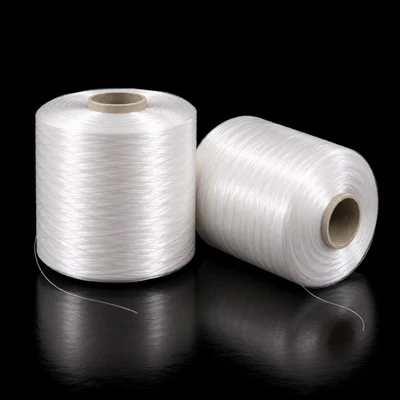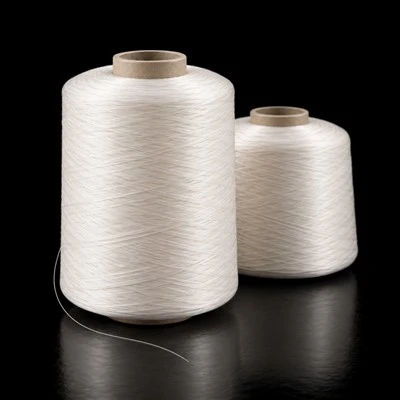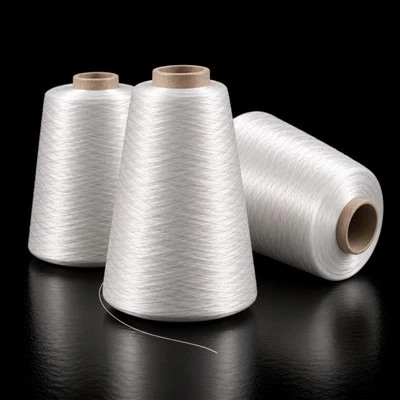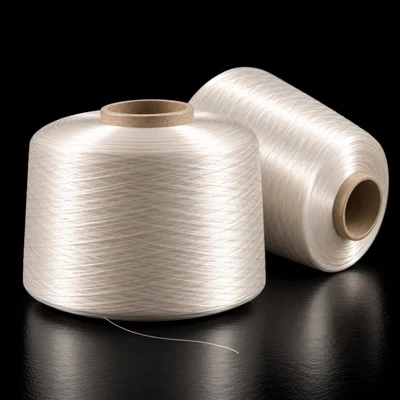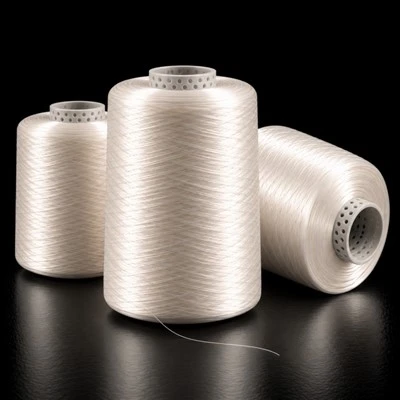
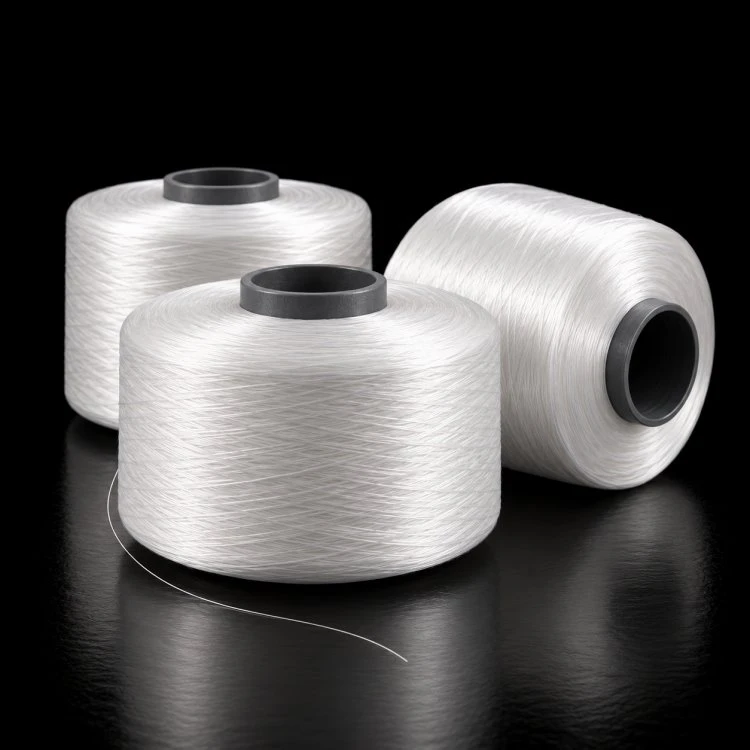
Suzhou Gongsheng Import & Export Co., Ltd. is one of the most reliable manufacturers and suppliers of nylon filament yarn in China, featured by quality products and low price. If you're going to wholesale advanced nylon filament yarn made in China, welcome to get pricelist and free sample from our factory. We also accept customized orders.
Opening
Nylon filament yarn - mainly polyamide 6 and polyamide 66 melt spun into continuous multifilament - is widely selected where abrasion resistance, elastic recovery and strength-to-weight performance are important. Polyamide's molecular structure contributes to high abrasion resistance and resilience, supporting applications such as hosiery, swimwear, socks, seamless knits and luggage fabrics.
The two polymer grades split the market by service temperature and property balance. nylon 6 yarn (polycaproamide, melting near 220°C) dyes easily with acid dyes, offers soft luster and is the workhorse for socks, tights and knitwear. nylon 66 yarn (polyhexamethylene adipamide, melting near 260°C) carries higher thermal stability, a stiffer modulus and superior fatigue life, favored for technical weaves, airbag-grade fabric and industrial binding. Our nylon dty yarn adds false-twist crimp for stretch hosiery and seamless bodywear.
Features & Material
Nylon's engineering profile is unique among apparel fibers: tenacity up to 8 cN/dtex for high-tenacity industrial grades, elongation at break tunable from 15% to over 40%, and elastic recovery above 95% after 10% stretch - the combination no polyester filament matches. Moisture regain around 4–4.5% keeps static low in knitting plants and gives the fiber a warmer, less synthetic skin feel than PET. Acid dyes produce deep, saturated shades with excellent light fastness at modest process cost, and heat-setting locks twist and structure with a wide processing window.
Grade selection should follow the end use. For hosiery and seamless knits, nylon 6 yarn with fine deniers (15D–70D) and SIM/NIM intermingling gives stable runability on circular machines. For swimwear, pairing nylon yarn with spandex as covered or core yarn is standard, and chlorine-resistant polymer variants extend garment life. For technical and industrial weaves - luggage, sailcloth, tire-cord adjacent constructions - nylon 66 yarn's higher melting point and lower creep protect seam integrity under sustained load. Note for sourcing teams: nylon 6 absorbs more water than 66 and swells slightly, so dimensional targets in wet finishing should be set on 6-specific shrinkage data, not on polyester experience.
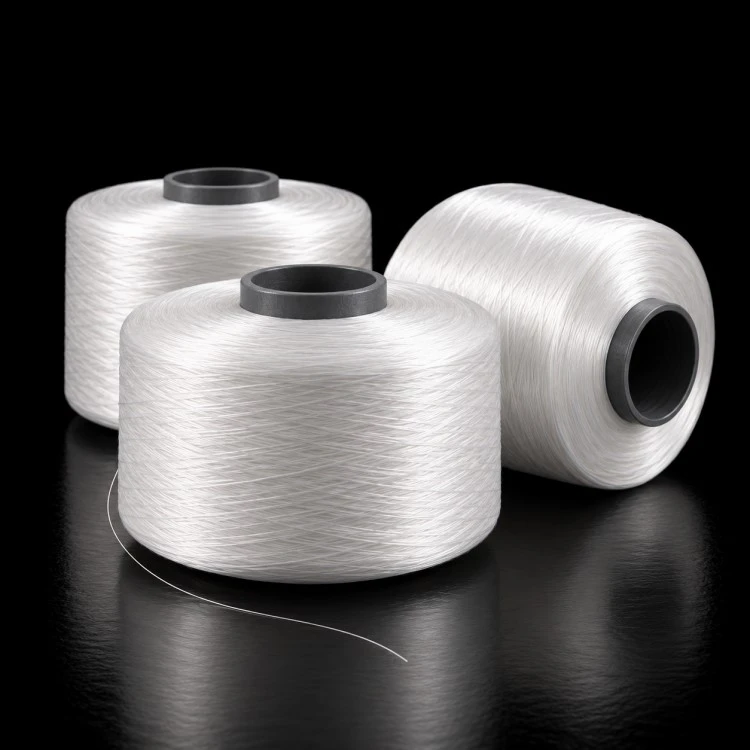
Specifications
|
Parameter |
Specification |
|
Material |
Polyamide 6 (PA6) / Polyamide 66 (PA66) |
|
Type |
HOY / FOY / DTY · Multifilament |
|
Linear Density |
15D / 20D / 40D / 70D / 100D / 210D / 420D |
|
Filament Count |
7F / 12F / 24F / 34F / 48F / 68F |
|
Tenacity |
4.0–5.5 cN/dtex (apparel) · up to 8.0 cN/dtex (HT industrial) |
|
Elongation |
16–45% (grade dependent) |
|
Elastic Recovery |
≥95% at 10% elongation (grade/test-method dependent) |
|
Melting Point |
≈220°C (PA6) · ≈260°C (PA66) |
|
Moisture Regain |
Typically 4–4.5% (test-method dependent) |
|
Dye Class |
Acid dyes (deep shades) · Disperse possible |
|
Luster |
Bright / Semi-dull / Full-dull |
|
Application |
Hosiery / Swimwear / Seamless knit / Luggage / Technical fabric |
Process Flow
Caprolactam / Adipic Acid + HMD Feeding → Polymerization (VK Tube / Salt Process) → Chip Drying → Melt Extrusion → Melt Spinning → Quench & Oiling → Drawing & Heat Setting → Intermingling → False-Twist Texturing (DTY) → Grading & Packing
Services
✓ PA6 vs PA66 grade selection for your application and service temperature.
✓ Fine-denier sample cones for circular machine trial runs.
✓ Spandex covered / core yarn development for swimwear and bodywear.
✓ Acid dye shade matching with light-fastness test reports.
✓ Industrial-grade tenacity verification per shipment (Uster / Instron).

FAQ
Q1. Which is better, nylon 6 or nylon 66?
A: Neither is universally better - they optimize different properties. PA6 melts lower (≈220°C vs ≈260°C), dyes more easily with acid dyes and is softer in hand, which suits hosiery and knitwear. PA66 offers higher thermal stability, higher modulus and better fatigue life, which suits technical weaves and anything exposed to sustained heat. Choose by service condition, not by a generic quality ranking.
Q2. Why does swimwear almost always use polyamide filament yarn?
A: Nylon is widely used in swimwear because it can provide good elastic recovery, a comfortable hand and deep shades with acid dyes. Actual recovery depends on the nylon grade, yarn construction and fabric structure; spandex content and fabric design also play major roles in fit retention.
Q3. What does nylon dty yarn do that FDY cannot?
A: DTY carries false-twist crimp, which can provide bulk, a softer hand and greater stretch potential than flat FDY. In hosiery and seamless knitting, DTY can contribute elasticity and coverage, while FDY is primarily selected for flatter, more dimensionally stable constructions. Actual stretch still depends on yarn and fabric design.
Q4. How should nylon fabrics be heat-set?
A: Set below the polymer melting point with a safety margin: typically 175–190°C for PA6 and 195–210°C for PA66, time and width tuned to fabric construction. Over-setting flattens bulk in DTY fabrics; under-setting leaves residual shrinkage that shows up after garment dyeing or washing.
Hot Tags: nylon filament yarn, China nylon filament yarn manufacturers, suppliers, factory