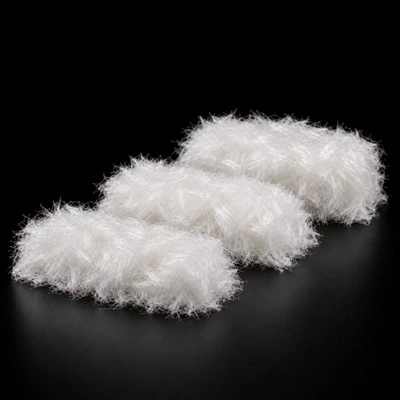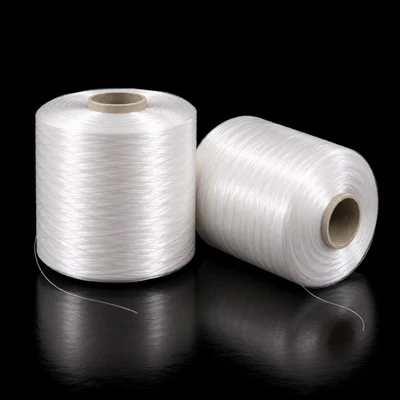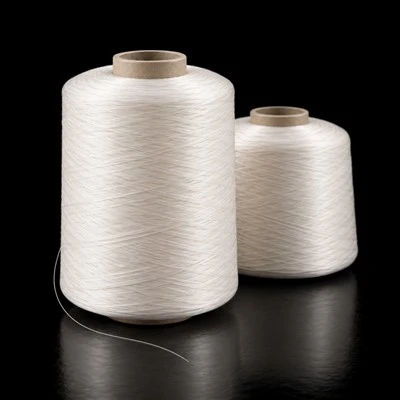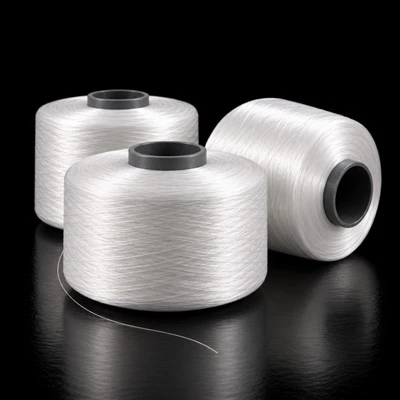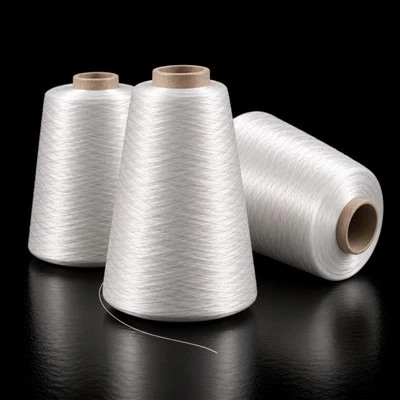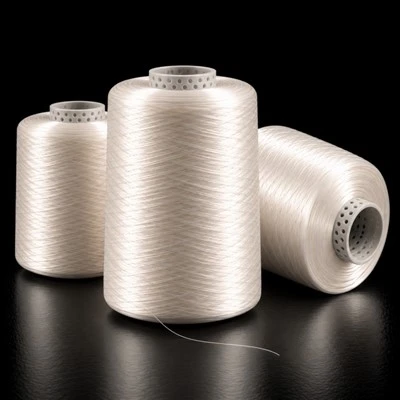
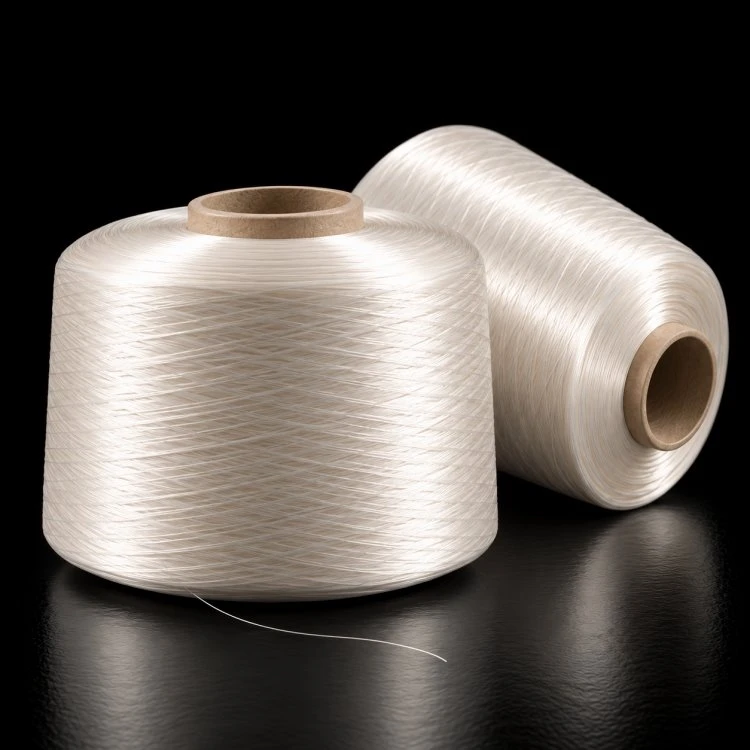
Suzhou Gongsheng Import & Export Co., Ltd. is one of the most reliable manufacturers and suppliers of acetate filament yarn in China, featured by quality products and low price. If you're going to wholesale advanced acetate filament yarn made in China, welcome to get pricelist and free sample from our factory. We also accept customized orders.
Opening
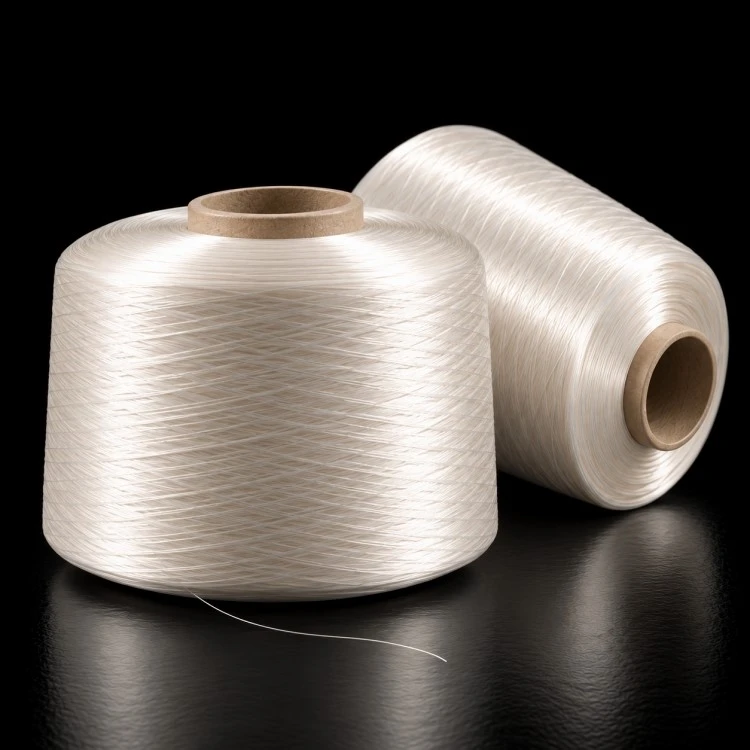
Acetate filament yarn is a regenerated-cellulose-based continuous filament made from cellulose acetate. Cellulose from wood pulp is partially esterified with acetic anhydride, dissolved in acetone and dry spun into smooth filaments with characteristic luster. The degree of acetyl substitution influences moisture behavior, heat response and fabric handle.
Our program splits into two families by acetyl content. Diacetate flat yarn (about 54–56% acetyl) is a conventional apparel filament with a ribbon-flat cross-section, soft hand and fluid drape, used for suiting linings, sari ribbon, ribbons and dress fabrics. Triacetate yarn (60–62% acetyl) has higher acetyl substitution and can be heat-set for pleat retention; its suitability for pleated garments and easy-care blends depends on the construction and process conditions. Both families are produced as acetate yarn on a dry-spinning platform with controlled denier and luster.
Features & Material
The optical character of cellulose acetate yarn comes from its ribbon-like cross-section and resulting light reflection, giving suitable constructions a silk-like luster rather than a glassy appearance. With moisture regain around 6–6.5% under the stated test basis, acetate can provide a relatively cool hand and a lower tendency to static under suitable conditions. Drape is generally fluid and less springy, which can suit tailored linings and gathered dress fabrics.
Grade selection is a service-condition decision. acetate lining grade diacetate can be selected for jacket and coat linings where dry cleaning is the care standard; strong alkali or high-pH processing should be avoided, so finishing needs to remain mild. Triacetate yarn can extend the processing range: after heat setting around 200–230°C, it can support pleat retention, while actual wash resistance depends on grade, fabric construction and process conditions. Both grades can be dyed with disperse dyes under suitable temperature profiles. For production teams, seam slippage and needle heat are practical considerations, so finer needles and balanced seam construction can be evaluated for high-twist and fine-denier fabrics.
Specifications
|
Parameter |
Specification |
|
Material |
Cellulose Acetate (esterified wood pulp) |
|
Family |
Diacetate (54–56% acetyl) / Triacetate (60–62%) |
|
Form |
Continuous filament, dry spun |
|
Linear Density |
55D / 75D / 120D / 150D |
|
Filament Count |
20F / 30F / 45F |
|
Cross-section |
Ribbon-flat (y-shaped edge) |
|
Dry Tenacity |
1.2–1.5 cN/dtex (grade/test-method dependent) |
|
Elongation |
22–30%(grade/test-method dependent) |
|
Moisture Regain |
6–6.5%(test-method dependent) |
|
Luster |
Bright / Soft dull |
|
Dye Class |
Disperse dyes (mild temperature) |
|
Heat Behavior |
Triacetate: heat-settable, pleat retention depends on grade/process · Diacetate: limited heat-setting |
|
Application |
Lining / Dress fabric / Ribbon / Kimono & sari / Pleated garments |
Process Flow
Wood Pulp Feeding → Acetylation (Acetic Anhydride) → Partial Hydrolysis → Precipitation & Drying → Dissolution in Acetone → Filtration → Dry Spinning → Twisting → Winding → Grading & Packing
Services
✓ Diacetate vs triacetate selection by care standard and garment construction.
✓ Lining fabric development with drape and seam-slippage testing.
✓ Pleat-setting process window consulting for triacetate yarn blends.
✓ Disperse dye shade matching at mild temperature profiles.
✓ Sample hanks and small-lot winding for sampling and showroom runs.

FAQ
Q1. How is acetate filament different from polyester lining yarn?
A: Three practical differences are luster, drape and static behavior. Acetate's ribbon cross-section can give a silk-like visual effect, while polyester may appear glossier or glassier depending on construction. Acetate generally has a fluid drape, while polyester often has higher elastic recovery. At a moisture regain of about 6–6.5% under the stated test basis, acetate may have a lower tendency to static than polyester in suitable conditions. Acetate has lower strength than many polyester yarns, so seam construction and end-use requirements should be considered.
Q2. What is diacetate flat yarn used for?
A: Typical apparel filament applications include suit and coat linings, ribbon and sari trim, and dress fabrics where fluid drape is desired. The flat cross-section contributes to a silk-like optical effect and soft hand. Diacetate is generally selected for dry-clean-care applications; strong alkali can cause hydrolysis, so wet finishing should remain mild.
Q3. Why choose triacetate yarn over diacetate?
A: Higher acetyl substitution gives triacetate a heat-setting capability suitable for pleat retention. This can support durable pleat effects and easy-care constructions, while actual wash performance depends on grade, fabric construction and finishing conditions. For garments requiring durable pleats, such as pleated skirts or kimono-style pieces, triacetate can be evaluated as an appropriate grade.
Q4. Can acetate yarn be blended with other filaments?
A: Yes, and it often is. Acetate-polyester blends combine the luster and hand of acetate with the strength of polyester; acetate-silk blends appear in sari and eveningwear. The constraint is dyeing: both components take disperse dyes, which simplifies one-bath processing compared with cellulose-synthetic mixes.
Hot Tags: acetate filament yarn, China acetate filament yarn manufacturers, suppliers, factory