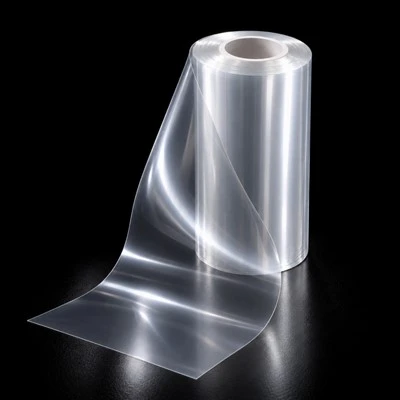
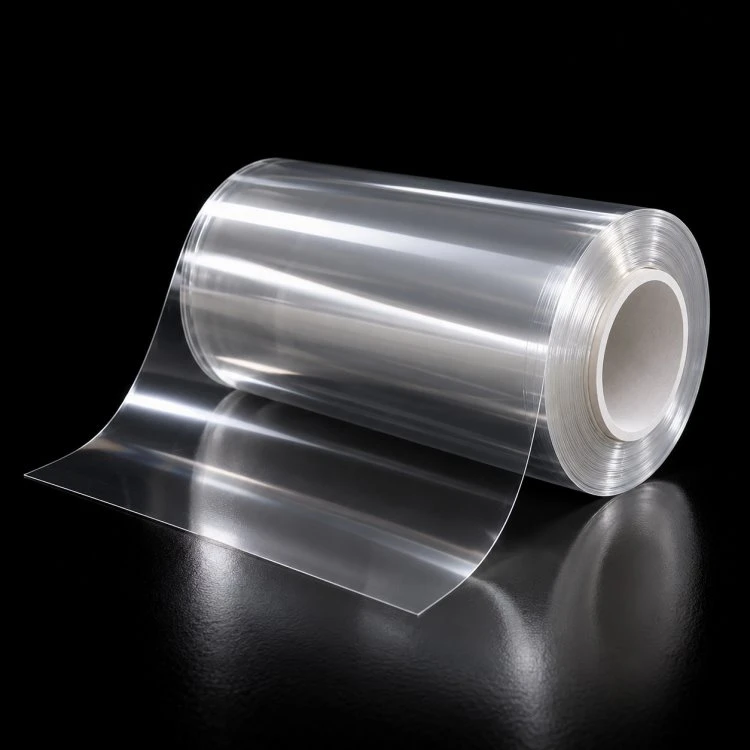
Suzhou Gongsheng Import & Export Co., Ltd. is one of the most reliable manufacturers and suppliers of polyester film (pet film) in China, featured by quality products and low price. If you're going to wholesale advanced polyester film (pet film) made in China, welcome to get pricelist and free sample from our factory. We also accept customized orders.
Opening
Polyester film is commonly supplied as biaxially oriented PET (BOPET): the polymer melt is extruded as a sheet and stretched in machine and transverse directions to develop molecular orientation, providing a combination of strength, dimensional stability and optical performance suited to printing, laminating, packaging and electrical applications. Actual mechanical and thermal limits depend on grade and test conditions. - release liners, capacitors, printable laminates, packaging lidding and graphic overlays.
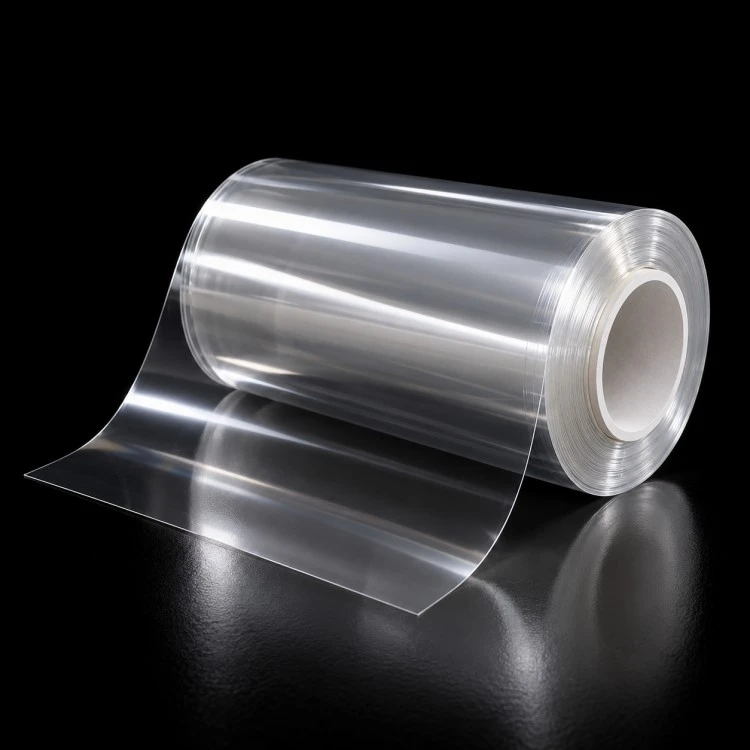
The product line splits by surface and function. transparent pet film is the clarity grade for laminating, printing and window packaging. metallized polyester film carries a vacuum-deposited aluminum layer that can provide substantially higher barrier to oxygen, moisture and light than the uncoated base film for snack packaging and insulation facing, plus the reflective aesthetics of hot-stamping and label stock. Coated, matte and heat-sealable variants extend the line to adhesives and seal-jaw applications. Thickness runs 12μm to 250μm, and every roll ships with gauge-uniformity data.
Features & Material
The engineering numbers explain PET film's market position. Tensile strength runs 150–250 MPa - several times ordinary PE film - with elongation at break low and controlled, because the film's job is dimensional precision, not stretch.Heat shrinkage at 150°C can be controlled to low levels for specified standard grades, with the exact value dependent on grade and test method, which is what keeps multi-color registration aligned through printing and laminating. Transparent pet film delivers 88–91% total light transmission with haze below 2%, and its surface energy out of the corona treater accepts adhesives, inks and metallization without pre-treatment.
The metallized and coated directions add functional layers on the same base. metallized polyester film may use a vacuum-deposited aluminum layer such as 40–50nm; barrier performance and light blocking depend on coating quality, thickness and test conditions - the barrier mathematics that snack packaging and insulation facings depend on. Heat-sealable coatings lower sealing temperature so PET film can close lidding on high-speed lines. Matte and anti-glare surfaces serve graphics and ID cards. Production notes: PET film is hygroscopic enough to matter - drying before deep-draw thermoforming prevents bubbles; and thickness selection should start from the mechanical load table, not from habit, because 12μm and 36μm are different products economically and mechanically.
Specifications
|
Parameter |
Specification |
|
Material |
Biaxially Oriented Polyethylene Terephthalate (BOPET) |
|
Thickness |
12μm / 23μm / 36μm / 50μm / 75μm / 125μm / 250μm |
|
Width |
600–2200mm · slitting to customer spec |
|
Tensile Strength |
150–250 MPa (MD/TD) |
|
Elongation |
80–180% (MD) · 80–150% (TD) |
|
Heat Shrinkage (150°C, 15min) |
≤1.5% (MD/TD, standard grade) |
|
Light Transmission |
88–91% (transparent pet film) |
|
Haze |
≤2% |
|
Service Temperature |
-70°C to 150°C continuous |
|
Surface Treatment |
Corona treated ≥48 dyn/cm · coated / matte / heat-sealable options |
|
Metallized Version |
Vacuum Al layer 40–50nm · high oxygen & light barrier |
|
Application |
Release liner / Printing & laminating / Capacitors / Packaging / Labels / Insulation facing |
Process Flow
PET Resin Drying → Melt Extrusion (Sheet Casting) → Chill Roll Quenching → Machine Direction Stretching (MDO) → Transverse Direction Stretching (TDO) → Heat Stabilization → Corona / Coating Treatment → Metallization (Metallized Grades) → Slitting & Rewinding → Gauge Testing & Packing
Services
✓ Thickness and grade selection against mechanical load and barrier requirements.
✓ Slitting and width customization with gauge-uniformity certificates per roll.
✓ Metallized and heat-sealable trials for packaging line qualification.
✓ Corona level verification (≥48 dyn/cm) with each transparent film lot.
✓ Sample rolls for printing, laminating and thermoforming trials.

FAQ
Q1. What makes biaxially oriented pet film stronger than cast PET film?
A: Orientation. Stretching in both machine and transverse directions aligns the polymer chains, multiplying tensile strength (150–250 MPa vs cast film's much lower values) and locking dimensional stability - the reason printed laminates keep registration and electrical films hold thickness tolerances. Cast PET is cheaper but mechanically a different product.
Q2. What barrier does metallized polyester film actually provide?
A: A vacuum-deposited 40–50nm aluminum layer cuts oxygen transmission to a small fraction of clear film and blocks light essentially completely. That combination is what snack packaging and insulation facings need: oxidation control without refrigeration and photostability for light-sensitive contents. For even higher barrier, SiOx-coated and foil-laminated versions are available.
Q3. How should pet film be handled before thermoforming or laminating?
A: Dry and edge-protected. PET absorbs ambient moisture slowly but enough to bubble during deep-draw thermoforming and to affect adhesive wet-out in laminating; drying before processing prevents both. Edge damage during transport and slitting shows up later as web breaks, so core protection and edge guarding matter.
Q4. Which thickness should I choose?
A: Start from the mechanical load table, not from what you used last year. 12μm serves labels and lightweight lidding; 23–36μm covers printing, laminating and release duty; 50μm and above serve electrical insulation, heavy laminates and industrial reinforcement. We match thickness to your load, barrier and cost targets with sample rolls for trials.
Hot Tags: polyester film (pet film), China polyester film (pet film) manufacturers, suppliers, factory